

As we welcome the new year of 2026, let’s reflect on the remarkable space events of the past year, including the appearance of the third interstellar visitor known as 3I/ATLAS and the inauguration of the Vera C. Rubin Observatory, promising new insights into the universe.
Looking forward, skywatchers can anticipate some exciting celestial events in the upcoming year. Starting with meteor showers, the Quadrantids shower, peaking on the night of Jan 2-3, is expected to produce around 120 meteors per hour, albeit challenging to observe due to its brief peak duration and interference from a full moon.
In July, the Perseid meteor shower will dazzle viewers with up to 150 meteors per hour during its peak on Aug 12-13, under a new moon, ensuring optimal visibility, especially in dark locations. Later in December, the Geminid meteor shower will offer another spectacular display, generating over 150 meteors per hour during its peak on Dec 13-14.
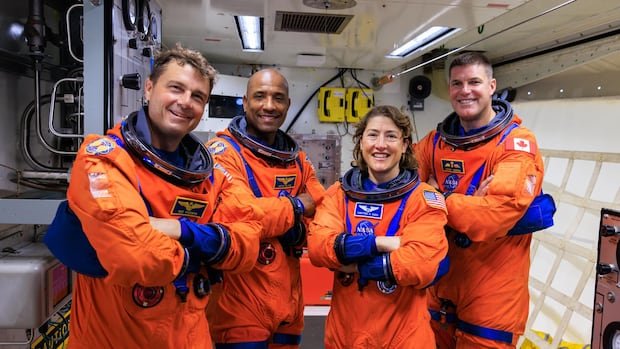
Notably, the Artemis II mission by NASA is set to launch, carrying astronauts including Canada’s Jeremy Hansen on a historic mission to the moon, surpassing previous human space travel records. The mission will involve orbiting the moon, conducting research, and testing systems before returning to Earth.
In terms of eclipses, 2026 brings a total lunar eclipse on March 3 visible across Canada, with a partial solar eclipse on Aug 12 observable in central and eastern regions, followed by a partial lunar eclipse on Aug 28.
Additionally, 2026 will witness other significant space missions, such as Rocket Lab’s mission to Venus, aiming to explore potential signs of life in the planet’s atmosphere. Japan’s Martian Moon Exploration mission will study Mars’ moons and collect samples, while the Nancy Grace Roman Space Telescope, targeting dark matter and energy, is scheduled for launch in fall 2026.
These anticipated events highlight the exciting prospects in space exploration for the year ahead, promising new discoveries and cosmic wonders for enthusiasts to observe. Stay tuned for more celestial surprises in 2026 by keeping an eye on the night sky.