
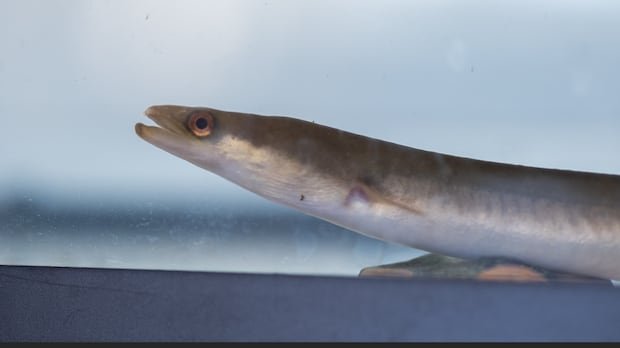

After Canada’s recent decision not to list the American eel under the Species at Risk Act (SARA), members of various First Nations communities, who hold cultural and spiritual significance for the species, are expressing concerns.
Charles Doucette, the fisheries director at Potlotek First Nation on Cape Breton Island, expressed disappointment over the lack of actions to support eel populations. Recalling memories of traditional eel harvesting practices within his family, Doucette highlighted the significant decline in eel populations in the Bras d’Or Lakes and southern Cape Breton, leading him to question the government’s decision.
Although the American eel was classified as “threatened” in 2012, the federal government postponed the decision to list it as a species at risk for 13 years. Instead of listing it under SARA, the government intends to manage eel populations under the Fisheries Act, a move applauded by commercial elver fishers in Atlantic Canada.
In Nova Scotia, where disputes over eel conservation involve commercial harvesters, environmentalists, treaty fishers, and Mi’kmaw knowledge keepers, concerns are rising over the visible decline in eel populations. Doucette observed the scarcity of eels in Cape Breton and fears a similar fate for southern mainland Nova Scotia.
Data from the Atlantic Canada Conservation Centre indicates that eel populations are vulnerable in Nova Scotia, imperiled in Prince Edward Island, and apparently secure in New Brunswick.
In Kitigan Zibi Anishinābeg, a community north of Ottawa, the Ottawa River has witnessed a drastic reduction in eel numbers over the past few decades. Kristi Leora Gansworth from Kitigan Zibi, representing both Onondaga and Anishinabe cultures, emphasized the historical importance of eels for medicine, cultural practices, and sustenance.
The decline in eel populations, attributed to damming and habitat loss, has sparked concerns among Indigenous communities like Kitigan Zibi and Mi’kma’ki. Efforts to protect the eel species and incorporate Indigenous knowledge led to the establishment of the Eel’s Back network, inspired by the late Elder William Commanda.
Experts like marine biologist Shelley Denny advocate for international collaboration to address eel conservation, especially in regions like Ontario and Quebec where hydroelectric facilities pose threats to eel habitats. Denny emphasizes the need for sustainable fishing practices and multi-national efforts to safeguard eel populations.
The Department of Fisheries and Oceans (DFO) stated that management measures for the upcoming elver season, including the total allowable catch, will be disclosed in the following year.