

Alberta Premier Danielle Smith has expressed willingness to make adjustments to Alberta’s industrial carbon pricing program, including the industrial carbon price set by the province. The decision to maintain the freeze on the industrial carbon price at $95 per tonne until 2026 contrasts with the federal government’s backstop price, which is scheduled to increase to $110 per tonne next year.
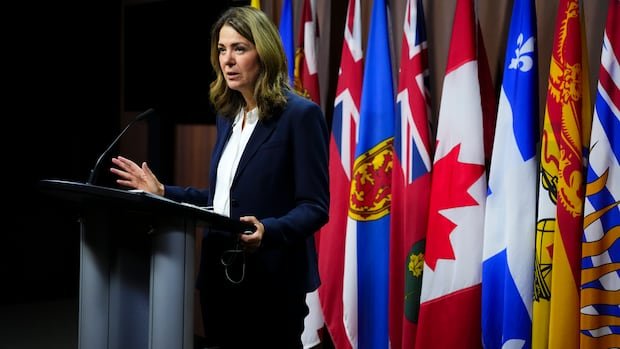
Speaking to the media in Ottawa after a meeting with Prime Minister Mark Carney, Smith emphasized that Alberta believes its current price strikes a balance between industry viability and fostering investments in green technology. She mentioned that the $95 per tonne carbon price is up for discussion as part of ongoing talks about program adjustments.
Federal ministers have evaded questions regarding the potential imposition of the federal backstop on Alberta in case its industrial carbon price program fails to meet federal regulations. The backstop rate is designed to be enforced if provinces lag behind, but the situation remains uncertain as Carney has not taken action against Saskatchewan, which eliminated its industrial carbon price earlier this year.
Carney, who campaigned on strengthening industrial carbon pricing while repealing the consumer carbon price, has been urged to consider imposing the higher price. The industrial price, which targets major emitters, is projected to significantly reduce greenhouse gas emissions compared to the consumer levy.
Changes to Alberta’s industrial carbon pricing program were proposed recently, allowing companies to invest in their emission reduction projects to avoid provincial fees. Additionally, smaller companies failing to meet emission thresholds can opt out of the carbon pricing system in 2025. While these changes were praised for benefiting the industry, concerns have been raised that they might deter investments in clean growth.
Smith is in discussions with Carney to facilitate the construction of a new pipeline from Alberta to the British Columbia coast. She has urged the federal government to lift the tanker ban off the B.C. coast, eliminate the electric vehicle sales mandate, remove the oil and gas emissions cap, and abolish the federal industrial carbon price to grant provinces regulatory autonomy.
Smith has proposed a potential “grand bargain” involving the Pathways Alliance carbon-capture project and an oil pipeline to Canada’s West Coast, although the project lacks private sector backing or a defined route. She aims to submit the pipeline project for consideration by Ottawa’s new Major Projects Office by next spring, hoping to finalize a deal by the Grey Cup on Nov. 16.