
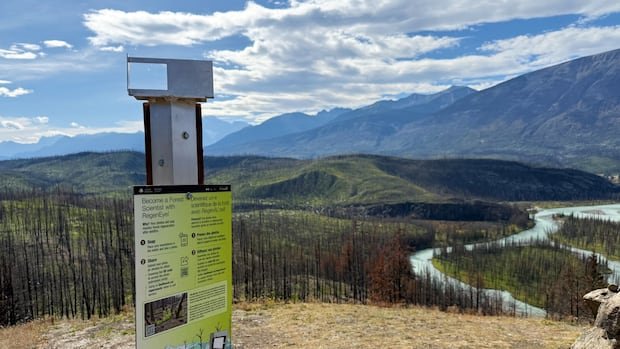

Visitors at Old Fort Point are witnessing a transformed landscape post the Jasper wildfire, where the once lush surroundings now bear the scars of the blaze that ravaged the area in July 2024. However, this desolate vista resembles photos captured in the early 1900s.
In a bid to capture the regeneration of the Jasper landscape after the devastating wildfire last year, hikers on the renowned trail are engaging in a citizen science initiative. Kevin Gedling, a communications and engagement officer at Parks Canada, expressed the rarity and uniqueness of being able to witness and contribute to the evolving landscape.
Collaborating with the University of Waterloo, Parks Canada has initiated a project to gather photos from three specific locations on the trail. This initiative utilizes GeoReach, an endeavor by the University of Waterloo that employs standardized imagery data to monitor changes in various landforms across Canada, including post-forest fire regrowth.
Repeat photography, a technique used by researchers to track changes in landscapes over time, is being employed to monitor the regrowth process. This summer, Parks Canada installed three cellphone stands equipped with cameras along the 3.8-kilometer hike, allowing visitors to capture images and share them via QR codes or the GeoReach website.
The recent resurgence of life in the area is evident, with vibrant grass sprouting amidst the charred remains and wildlife beginning to reemerge. Notable plants like purple fleabane and yellow arnica have started to thrive in the nutrient-rich soil left behind by the fire, signaling the initial stages of forest regeneration.
Despite sections of the trail still bearing the imprint of the wildfire, signs of renewal are visible, with aspen trees showing signs of regeneration through existing root systems. The rejuvenated grass post-fire is proving to be a boon for wildlife, providing a more nutritious source of food for species like elk and deer.
The landscape, now transitioning into a grassland ecosystem, signifies a return to the basics following the conflagration. Gedling emphasized the importance of wildfires in maintaining a healthy forest cycle, acknowledging the role they play despite the challenges they pose to communities like Jasper.
While the Jasper wildfire complex had profound impacts, including structural damage and displacement of residents, Gedling highlighted the positive ecological impact of the fire in fostering regeneration. He underscored the natural role of wildfires in forest ecosystems, despite the devastation they may bring to human settlements.