

Afghanistan reported on Sunday that it had eliminated 58 Pakistani soldiers during overnight border operations in retaliation for what it deemed as repeated infringements of its territorial boundaries and airspace. Earlier, Afghan officials accused Pakistan of carrying out airstrikes in Kabul, the capital, and a market in the eastern part of the country. However, Pakistan did not acknowledge responsibility for the attacks.
Zabihullah Mujahid, the chief spokesperson for the Taliban government, stated that Afghan forces had seized 25 Pakistani army outposts, resulting in the death of 58 soldiers and injuring 30 others. Mujahid assured at a news briefing in Kabul that the situation along all official and unofficial borders of Afghanistan was under control, with illegal activities being largely thwarted. There was no immediate response from Pakistan regarding the reported casualties.
Pakistan has previously conducted strikes within Afghanistan, targeting alleged militant hideouts in remote and mountainous regions. Border skirmishes between the two nations have occurred in the past. The intense clashes on Saturday night highlight the escalating tensions between the neighboring countries.
The Afghan Taliban’s Defense Ministry announced on Sunday morning that its forces had carried out successful retaliatory operations along the border. The ministry warned that Afghan armed forces were fully prepared to defend the nation’s borders and would respond robustly if Afghanistan’s territorial integrity was violated again.
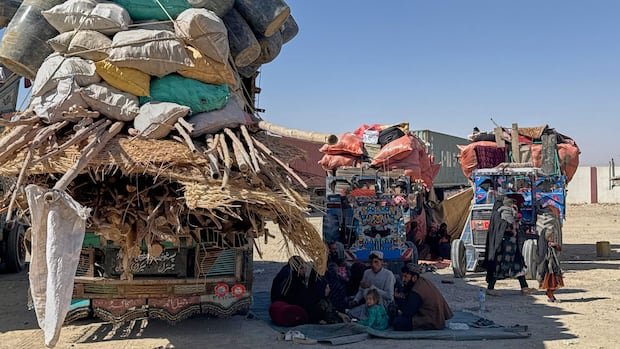
The Torkham border crossing, a key trade route linking the two countries, did not open as scheduled on Sunday. Similarly, the Chaman crossing in southwest Pakistan also remained closed due to the deteriorating security situation, leading to the rejection of individuals, including Afghan refugees departing from Pakistan.
Regional powers have urged for calm amidst the escalating conflict. Pakistan accuses Afghan authorities of sheltering members of the banned group Tehreek-i-Taliban Pakistan, alleging their involvement in deadly attacks within Pakistan. On the other hand, Kabul denies these accusations, asserting that it does not permit its territory to be used for attacks against other nations.
The recent border clashes between Afghanistan and Pakistan could potentially destabilize the region. Earlier this year, India and Pakistan were on the brink of war following a deadly incident in the disputed Kashmir region, underscoring the volatility in the area.
India has strengthened its ties with Afghanistan’s Taliban-led government, including upgrading its technical mission in Kabul to a full embassy. Saudi Arabia has called for restraint and dialogue to de-escalate tensions and maintain regional security and stability, following its recent mutual defense pact with Pakistan.
Pakistan’s Prime Minister Shehbaz Sharif condemned the assault by Afghanistan before the reported casualties, emphasizing that Pakistan’s army had responded forcefully and destroyed multiple Afghan posts, compelling them to withdraw. Pakistani security officials released videos showing purportedly demolished Afghan checkpoints, although independent verification was not feasible due to restricted media access to these conflict zones.
According to Pakistani security officials, Afghan forces engaged in gunfire exchanges in several northwestern border regions within Khyber Pakhtunkhwa province. Islamabad officials stated that Pakistan had seized control of 19 Afghan border posts used as launch pads for attacks, with the Taliban personnel either eliminated or fleeing. The official also noted significant destruction at the captured Afghan posts.
Despite sharing a 2,611-kilometer border known as the Durand Line, Afghanistan has never formally recognized it, perpetuating a longstanding source of contention between the two nations.