
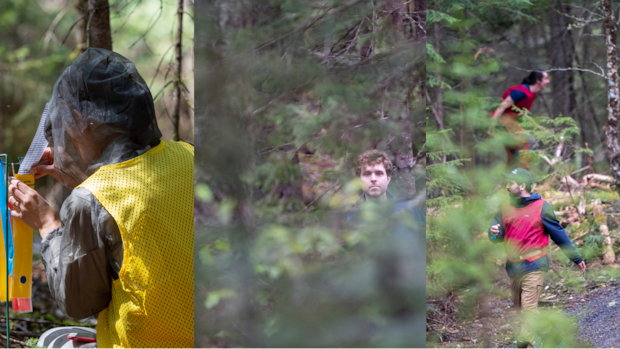

In a recent study, Université Laval ecologist David Bolduc engaged in a unique experiment to explore predator-prey interactions in a Quebec forest. Bolduc and a team of researchers, along with international students, gathered at the Éco-Laurentides park near Val-Morin for a game simulating predator-prey dynamics.
The participants, divided into prey, mesopredators, and apex predators groups, navigated the play area searching for resources, connecting with team members, and avoiding being caught. The researchers observed that humans, like animals, employed similar survival strategies during the simulations.
Published in the journal Methods in Ecology and Evolution, the study emphasized the game’s value in understanding ecosystem dynamics. However, it was noted that findings from such experiments cannot be directly applied to real-life wild animal behavior due to the inherent differences in stakes.
The game provided a practical approach to studying predator-prey relationships, offering insights that could inform further research in natural habitats. Despite its limitations, the experiment was praised for its innovative and engaging approach to learning about animal behavior and ecological theory.
Experts like Mathieu Leblond and Jean-Philippe Gibert commended the study for its creativity and potential educational value. While the game highlighted similarities between human and animal behaviors, it also underscored the unique complexities and individual biases that influence human interactions within the simulated ecosystem.
Overall, the predator-prey game served as a valuable teaching tool, sparking insightful discussions among participants and promoting a new perspective on ecological theory and animal behavior.