
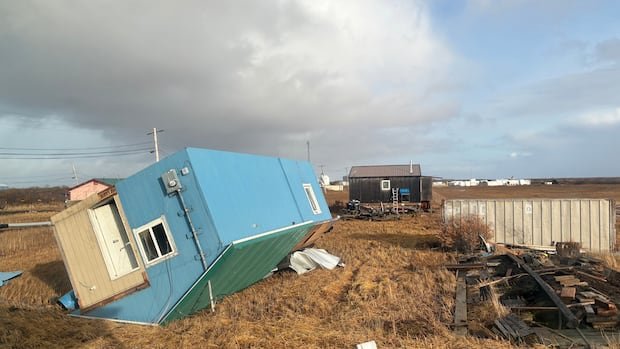

Severe devastation struck western Alaska as the remnants of Typhoon Halong unleashed hurricane-force winds, storm surges, and flooding, resulting in one fatality and two individuals missing. Over 50 people were rescued, including some from rooftops, with officials emphasizing the long road to recovery and the urgent need for ongoing support in the hardest-hit areas.
Describing the situation in Kipnuk and Kwigillingok as “absolute devastation,” U.S. Coast Guard official Capt. Christopher Culpepper highlighted the impact of the storm. Alaska State Troopers reported the rescue of at least 51 individuals and two dogs in the affected villages, which experienced significant storm surges.
In Kwigillingok, one woman was found deceased, and two individuals were still unaccounted for, while initial reports of missing persons in Kipnuk were later confirmed as inaccurate. Most residents sought refuge in local schools, with the Coastal Villages Region Fund noting the sheltering of community members.
Kwigillingok, home to around 380 residents, faces susceptibility to flooding due to its low-lying location. A 2022 report by the Alaska Institute for Justice emphasized the escalating frequency and severity of floods in the region, advocating for urgent community relocation.
In addition to housing issues, impacted residents reported power outages, water shortages, food spoilage, and damage to heating systems, posing challenges for the upcoming winter season. Eyewitnesses like Jamie Jenkins from Napakiak described the storm’s ferocity, with howling winds and rising waters prompting evacuations to safety.
State officials, including Gov. Mike Dunleavy and U.S. Senators Lisa Murkowski and Dan Sullivan, vowed to prioritize climate resilience and infrastructure investments in Alaska. Mitigating the effects of erosion and permafrost melting, exacerbated by climate change, is crucial to safeguarding communities and critical infrastructure in the region.