

Miguel Angel Villegas Escobar reported that more than a dozen individuals lost their lives in his area, isolated from the rest of Hidalgo, Mexico, due to heavy rainfall causing bridges and roads to be washed away.
As the regional director of primary education in Chahuaco, located in landlocked Hidalgo, Villegas Escobar mentioned via WhatsApp voice messages that numerous families were swept away by extensive flooding triggered by a four-day downpour across five states in the Gulf Coast and central regions.
He noted that 15 people in Tianguistengo municipality, including various villages like Chahuaco, succumbed to the floodwaters and were buried under mud. Additionally, two individuals remain missing in the adjacent village of Tlacolula, which bore the brunt of the devastation. Most homes in Tlacolula were obliterated, with residents from Chahuaco using old trails and pack animals to deliver aid to the affected population.
The storms resulted in 64 fatalities and 65 missing persons, according to Mexican authorities. The heavy rainfall between Oct. 6 and Oct. 9 led to overflowing rivers, power outages, landslides, and road damages in Veracruz, Hidalgo, Puebla, Querétaro, and San Luis Potosi.
Laura Velázquez, the national coordinator for the federal civil protection agency, mentioned during a press briefing that the federal, state, and local governments were actively assisting affected communities.
Veracruz, Hidalgo, and Puebla were the most severely impacted states, with 56 casualties and over 100 communities affected. Images circulating on social media depicted streets transformed into rivers, residents stranded on rooftops, and roads destroyed by landslides. Criticism arose towards President Claudia Sheinbaum and state governors for the perceived delayed response and lack of evacuation alerts.
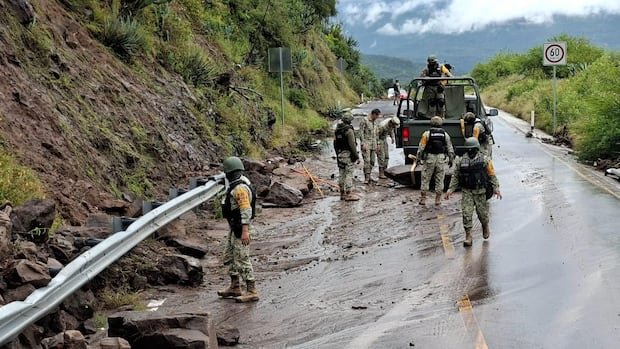
Sheinbaum disclosed that more than 100,000 residences suffered damage from the rains. Helicopters were deployed to reach approximately 60 isolated communities in Veracruz, Hidalgo, and Puebla due to road closures. She emphasized prioritizing the restoration of federal and state highways to reach the affected areas promptly.
Authorities were monitoring tropical cyclones and hurricanes off the Pacific coast but were caught off guard by the unexpected intensity of the Gulf of Mexico low-pressure system colliding with a cold front from Texas. The rains overwhelmed the already saturated region, leading to widespread flooding.
Tianguistengo was identified as a critical zone by the government, prompting military intervention to reconstruct infrastructure. Villegas Escobar appealed to local officials to aid Tlacolula, showcasing the severe damage inflicted on the village, particularly its primary school.
The aftermath of Mexico’s devastating floods and landslides underscored the urgent need for support and recovery efforts in the affected regions.