
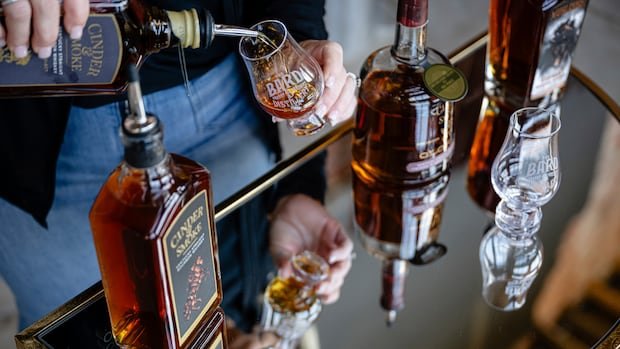

It has been a considerable period since numerous Canadians have experienced the distinctive taste of smooth Kentucky bourbon. The aroma, spiciness, and sometimes smoky essence of this drink have been absent from the shelves for a significant portion of the past year due to trade tensions initiated by U.S. President Donald Trump.
In response to the possibility of Canada becoming the “51st state,” consumers and lawmakers rallied behind a “Buy Canadian” movement. Bourbon, a beloved choice among many, found itself entangled in the conflict. Ottawa-based whisky expert Davin de Kergommeaux expressed his support for boycotting American products in favor of Canadian alternatives, emphasizing the importance of preserving the availability of bourbon.
Canada had long been a vital market for bourbon brands like Jim Beam and Maker’s Mark before provinces started removing American spirits from stores. De Kergommeaux, an authority on Canadian whisky, acknowledges the shift in the liquor landscape and the enduring impact of recent events.
Bourbon gained popularity in Canada over a decade ago, marked by robust marketing strategies and a desire for a different whisky experience. Craig Peters, CEO of Maverick Distillery, highlighted the unique aspects of bourbon production, such as aging in new oak barrels and the specific corn mash content required for its production.
Despite the challenges faced by the bourbon industry, including a significant drop in exports to Canada, there is optimism for Canadian craft whisky producers to capitalize on the current market dynamics. Maverick Distillery has adapted by bottling Kentucky whisky in Canada, catering to the demand for bourbon substitutes while adhering to regulations concerning geographic names in alcohol production.
While some distillers are innovating with bourbon-style variations, the overall whisky and liquor industry faces global downturns in sales. De Kergommeaux remains optimistic about the resurgence of Canadian whisky, emphasizing the growing demand and appreciation for locally produced spirits.
As the preference for alcohol shifts and cannabis beverages gain popularity, Canadian distillers are witnessing increased interest in their products. De Kergommeaux believes that consumers exploring Canadian whiskies as bourbon alternatives are discovering the quality and diversity offered by local distilleries.