

A student from Dalhousie University is blending their love for conservation and art to aid in the revival of native kelp populations. The warmer ocean temperatures in Nova Scotia have severely impacted the kelp population, making it crucial to find innovative solutions.
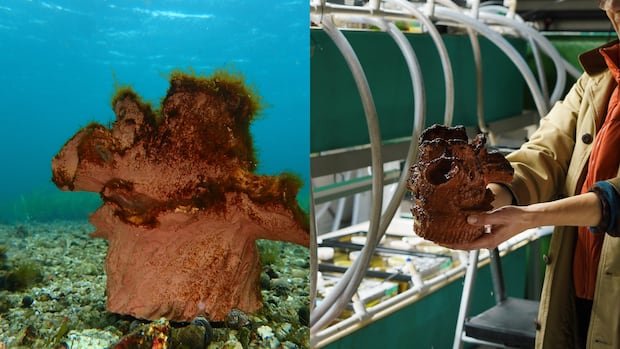
Kit Tymoshuk created clay pots designed to nurture baby kelp, offering a stable environment for growth. Inspired by the concept of growing kelp on unconventional surfaces, Tymoshuk secured a $5,000 grant from Ocean Wise to turn their idea into reality. They gathered wild clay from various locations during the summer, selecting the best quality after meticulous testing.
Opting for locally sourced wild clay over commercial alternatives, Tymoshuk carefully crafted pots using clay from Stewiacke and Annapolis Royal, supplemented with some commercial clay. The design of the pots aimed to provide optimal conditions for kelp growth, drawing inspiration from natural elements like corals and barnacles.
Following the creation process in their backyard pottery wheel, Tymoshuk took the pots to the Aquatron Laboratory at Dalhousie University. There, they initiated the growth of kelp spores in a controlled setting before submerging the pots in water for spore settlement. After five weeks, young kelp began sprouting from the pots, signaling readiness for deployment.
With the help of their friend Teigan Labor, a passionate snorkeler, Tymoshuk transported the pots to Cranberry Cove near Peggys Cove for deployment in December. The project, documenting the journey from clay collection to kelp restoration, culminated in an underwater art installation. Tymoshuk hopes to revisit the site soon to observe the progress of the kelp growth and ensure its success.
While the pots await monitoring, Tymoshuk anticipates the kelp flourishing into its characteristic string form during the winter. The innovative project not only aids in kelp restoration but also offers a unique underwater art experience for snorkelers to enjoy.