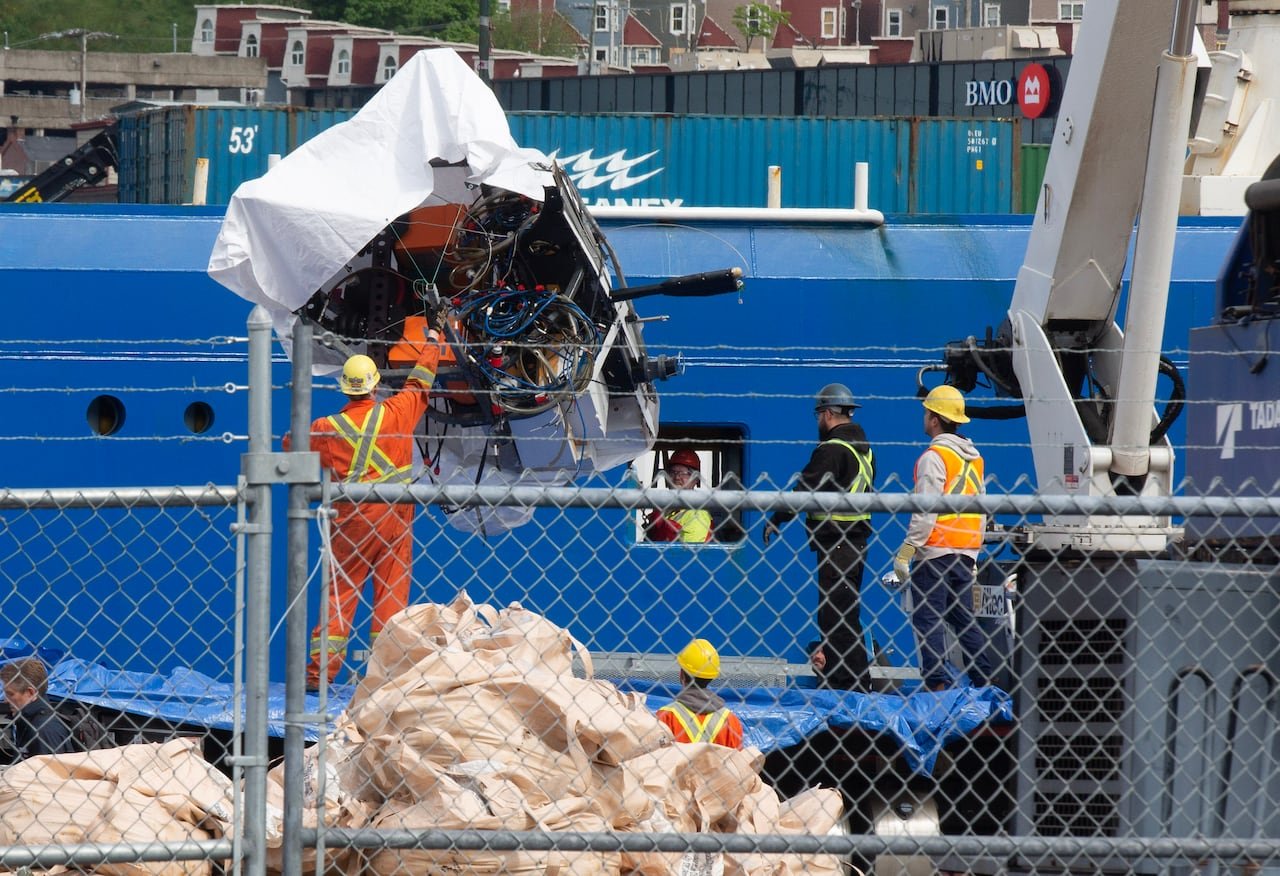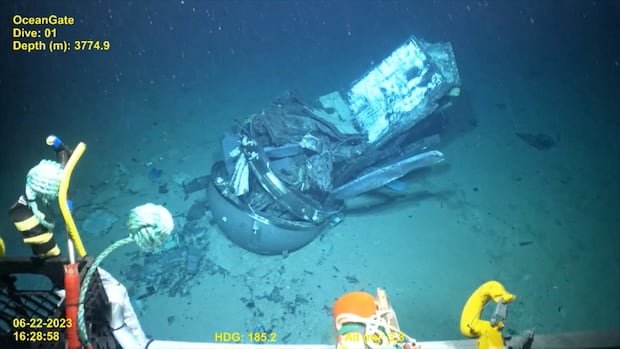

An investigation by the U.S. National Transportation Safety Board has determined that a flawed design caused the tragic implosion of an experimental submersible, resulting in the death of five individuals en route to explore the Titanic wreck. The NTSB’s final report on the incident in June 2023 revealed that the Titan submersible’s carbon fiber composite pressure vessel had structural anomalies and failed to meet essential strength and durability standards due to faulty engineering.
The report also criticized OceanGate, the company that owned the Titan, for inadequate testing of the vessel, highlighting a lack of awareness regarding its true durability. Furthermore, the NTSB suggested that had OceanGate followed standard emergency response protocols, the wreckage of the Titan could have been located sooner, potentially saving time and resources despite the inability to conduct a rescue operation.
‘Serious Flaws’
The NTSB findings align with a separate report from the U.S. Coast Guard, released in August, which characterized the implosion as avoidable. The coast guard identified significant shortcomings in safety procedures at OceanGate, a Washington-based private firm, citing glaring disparities between stated safety protocols and actual operational practices.
Following the incident, OceanGate ceased operations in July 2023 and eventually shut down. The company declined to comment on the NTSB report, offering condolences to the families of the deceased individuals following the coast guard’s critical assessment in August.
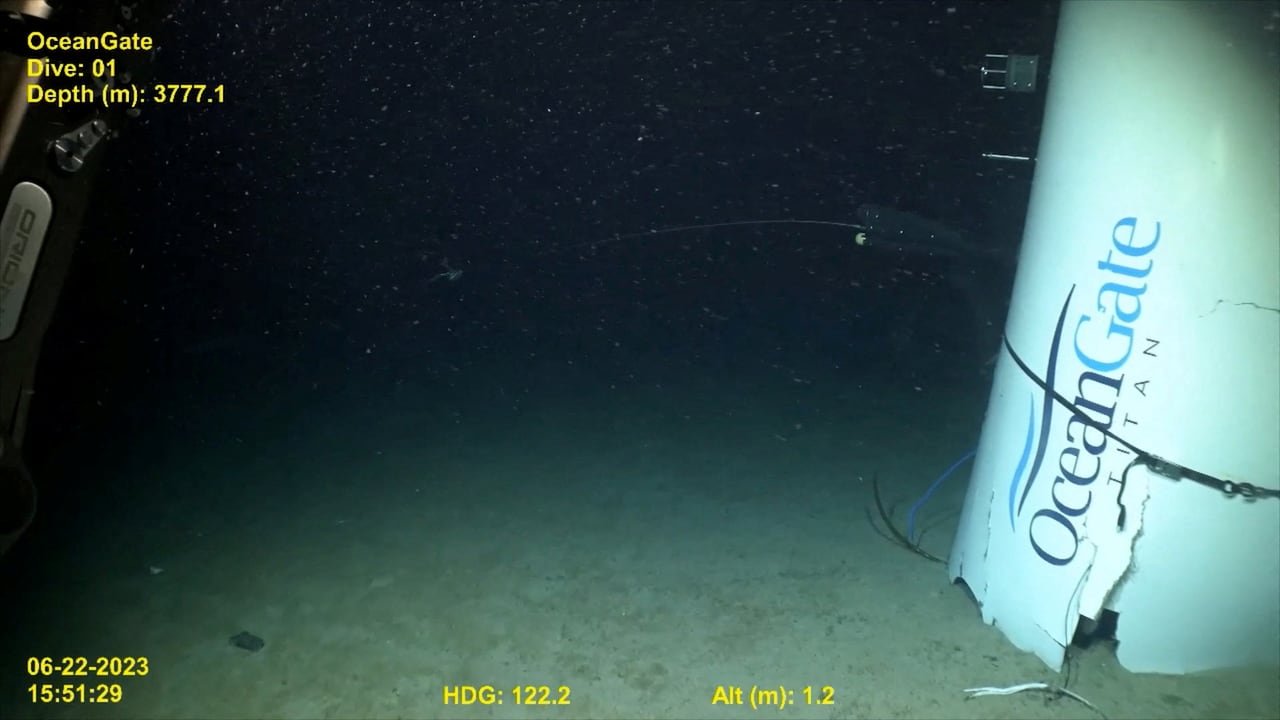
The tragic incident claimed the lives of OceanGate CEO Stockton Rush, French underwater explorer Paul-Henri Nargeolet, renowned as “Mr. Titanic,” British adventurer Hamish Harding, and two members of a prominent Pakistani family, Shahzada Dawood and his son Suleman Dawood. The aftermath of the Titan implosion sparked legal action and calls for enhanced oversight of private deep-sea expeditions.
The NTSB report recommends that the coast guard convene a team of experts to examine submersibles and other pressure vessels intended for human use. Additionally, it suggests that the Coast Guard establish regulations for such vehicles based on the findings of the expert panel.
The report also urges the coast guard to share the study’s outcomes with the industry, which has seen a rise in privately funded exploration ventures in recent years.
The Titan submersible had been visiting the Titanic site since 2021, with its final dive occurring on June 18, 2023. Following a loss of contact with the support vessel, a search operation was launched, involving ships, planes, and equipment dispatched to the area approximately 700 kilometers south of St. John’s.
A multinational search for survivors in the North Atlantic captured global attention but tragically concluded with no survivors. Subsequent investigations by the coast guard and other authorities delved into the circumstances surrounding the incident.