
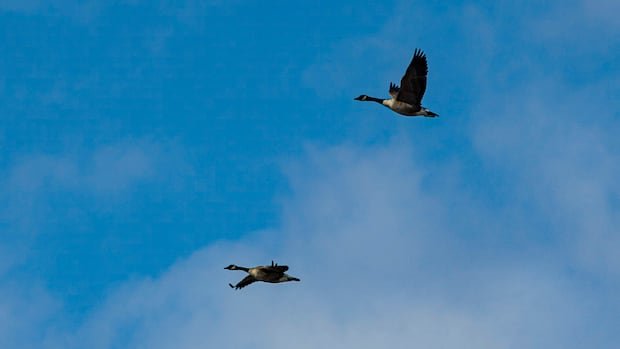

The Canadian Food Inspection Agency has identified a highly infectious form of avian influenza in multiple samples collected in southern Manitoba following an extraordinary bird die-off. Approximately 500 bird carcasses, predominantly Canada geese, were discovered near water streams in the region in early December. Various clusters of deceased birds were also found near the Red River north of Winnipeg’s Perimeter Highway, with the largest concentration located in a group of ponds in Niverville.
Frank Baldwin, a biologist with the Canadian Wildlife Service, stated that after testing positive for avian influenza, the bird samples were sent to the Canadian Food Inspection Agency to determine the strain of the infection. A total of 39 wild bird samples were submitted for testing, and laboratory analysis confirmed that 38 of them were positive for the highly pathogenic H5N1 strain of avian influenza.
Hannah Wallace, a University of Manitoba researcher specializing in viral immunology, expressed relief that the samples tested positive for the H5N1 strain, which is known to cause significant disease and mortality in birds. She mentioned concerns about potential mutations of the virus into more dangerous strains affecting both birds and humans. H5N1 is the primary avian influenza strain circulating among domestic poultry and wild bird populations in North America.
While avian influenza has been a longstanding concern for scientists and poultry farmers alike in Manitoba, Wallace emphasized that most birds in Canada have been exposed to the H5N1 strain, providing them with some level of immunity. Factors such as weakened or underfed birds, prolonged stays due to mild weather, and food shortages could contribute to increased susceptibility to the virus.
Research has shown that avian influenza can persist in the environment even after bird migration seasons. The virus may still linger in ponds or river sediment, with the potential to survive through winter and pose risks in the upcoming spring. Farmers, including Rod Wiebe from Manitoba Chicken Producers, highlighted the challenges in controlling bird flu transmission from wild birds, especially during peak migration seasons in fall and spring.
Candace Lylyk, owner of Breezy Birds Farm in Morris, shared her efforts to safeguard her poultry farm against wild bird contact to prevent the spread of avian influenza. Stringent bio-security measures have been implemented, including restrictions on farm visits and disinfection protocols for incoming vehicles, reflecting the industry’s proactive stance in mitigating the risks associated with the virus.
The detection of the H5N1 strain among the deceased birds in Manitoba serves as a reminder of the ongoing threat posed by avian influenza and the importance of vigilance in monitoring and preventing its spread among bird populations, wildlife, and potentially to humans.