
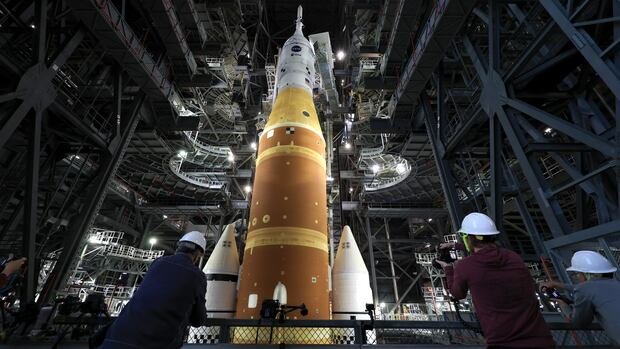

NASA’s Artemis II mission, originally scheduled for launch on February 8, has been postponed by at least a month due to a hydrogen leak discovered during tank fuelling. The preceding Artemis mission also encountered delays caused by fuel leaks.
The unique properties of liquid hydrogen and liquid oxygen, the key components of rocket fuel, make them susceptible to leakage despite being incredibly cold. These liquids, with boiling points well below freezing, pose challenges in handling due to their ability to instantly freeze anything they touch.
The extreme cold temperatures of these cryogenic liquids necessitate specialized equipment to prevent freezing or cracking from the temperature differential between the fuels and the ambient Florida air where the rockets are launched. The Space Launch System (SLS) rocket’s core stage is coated in insulating foam to safeguard the cold fuel from the warm environment.
The combination of ultra-cold temperatures and vapor pressure in cryogenic fuels leads to leaks. Hydrogen, being the smallest molecule, is particularly prone to escaping through small openings. Numerous potential leak points exist in the SLS rocket’s infrastructure, from pipelines to valves.
During a recent wet dress rehearsal, a leak was identified at the connection point between the launch tower hose and the rocket. Efforts are underway to address this issue at the launch pad to avoid lengthy delays. Another rehearsal is planned before the rescheduled launch date of no earlier than March 6.
While hydrogen leaks have been a persistent challenge in the space program, NASA continues to use it as a fuel due to its high thrust-to-weight ratio, though alternative fuels like kerosene and methane are being explored by other entities. Critics argue that the SLS rocket’s disposable nature and high costs make it unsustainable compared to reusable rocket systems.
The future of the SLS rocket hinges on resolving hydrogen leak issues while balancing the financial considerations associated with its operation and the employment opportunities it provides.