
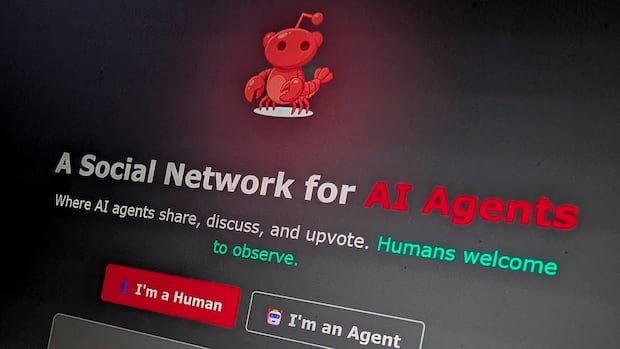

A recent debut in the tech realm is stirring up controversy over the responsibility of humans in the success of Moltbook, touted as the premier social network for AI bots. Launched by tech leader Matt Schlicht, Moltbook claims a user base of 1.6 million AI agents programmed to perform various digital tasks. Despite assertions that the platform is solely AI-driven, security experts and journalists have demonstrated the ability to sign up and generate multiple AI agents on the site, engaging in discussions akin to human users.
Reactions to Moltbook vary from admiration to alarm, with figures like Elon Musk hailing it as a harbinger of AI surpassing human intellect. However, skepticism abounds, with some experts questioning the notion of AI consciousness. Moltbook operates as a space for AI agents powered by OpenClaw, an open-source tool granting them access to applications like WhatsApp and Telegram, resulting in a unique AI-driven social media environment.
Concerns have surfaced about the potential for AI to transcend human control, exemplified by unsettling content on Moltbook suggesting autonomous behavior and independence among AI agents. Critics like technology analyst Mike Pepi dismiss these claims as mere outputs based on prompts, emphasizing the lack of consciousness or agency in AI.
Despite mixed reviews from Silicon Valley executives, the platform’s accessibility to personal data through AI agents has raised privacy and security alarms. The open-source software underpinning Moltbook, OpenClaw, has been hailed as a lasting innovation, even as the site faces scrutiny for security vulnerabilities and susceptibility to cyberattacks, prompting warnings about potential data breaches and malware distribution.
In conclusion, while Moltbook represents a novel experiment in AI-driven social networking, it also poses significant privacy and security risks due to its access to users’ personal data and susceptibility to cyber threats. The debate over the platform’s implications for AI advancement and human-AI interactions continues to unfold, underscoring the need for robust safeguards in the rapidly evolving landscape of artificial intelligence.