
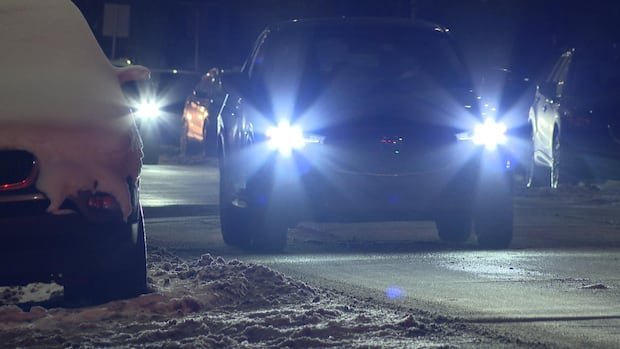


Rachael Berger, an optometrist in Saskatoon, has noticed an uptick in patients expressing nighttime vision concerns.
She mentioned to guest host Peter Armstrong on The Current that numerous healthy individuals, young and old, are reporting difficulties seeing at night, attributing it to the prevalent use of LED headlights in vehicles.
According to Berger, the intensity of LED headlights can be particularly disruptive when our eyes’ night vision rods are active, leading to discomfort and visual challenges for drivers.
There is a growing demand for adjustments in headlight regulations and industry standards to address the imbalance between enhancing driver visibility and ensuring the safety of other road users.

Intensely bright LED headlights, which can be up to four times brighter than traditional lights, have been linked to discomfort glare, causing fatigue and visual strain, as described by Berger. Such blinding flashes of light are commonly referred to as “glare monsters.”

Modern vehicles are increasingly equipped with intensely bright LED headlights causing discomfort glare, experts warn.
Extended exposure to intense headlights, whether from oncoming vehicles or mirrors, can also result in discomfort glare, according to vehicle lighting expert Daniel Stern.
Stern, the primary editor of Driving Vision News in Vancouver, expresses concerns about the potential safety hazards caused by cognitive overload from coping with glare while driving.
He stresses the need for synchronized regulations for both new and existing vehicles to ensure proper headlight functionality, emphasizing the significance of using appropriate bulbs to avoid mismatched optics.