
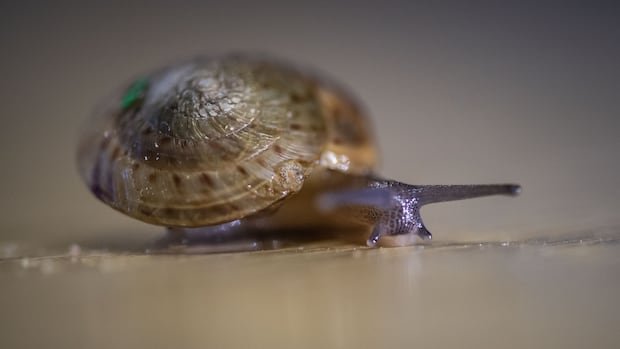

A decade ago, the sole surviving population of greater Bermuda land snails was found in an alleyway in Hamilton, the capital city, where they had settled on concrete slabs near a dripping air conditioner. Presently, these native creatures seem to be thriving in their natural habitat once again. This positive outcome is attributed to the diligent efforts of conservationists who bred over 10,000 snails in captivity and reintroduced them into protected wooded areas across the archipelago over the past seven years.
Katie Kelton, an invertebrate keeper at Chester Zoo in the U.K., expressed great satisfaction with the progress, stating that the snails are flourishing, with confirmed breeding and increasing numbers, marking the project as a success. The collaborative initiative involving Chester Zoo, Biolinx Environmental Research in Canada, and the Bermuda government will soon publish a study in Oryx, The International Journal of Conservation, showcasing the program’s achievements.
Despite the recent success, the snails still face threats from habitat destruction and invasive predator species, challenges that had nearly pushed them to extinction. The greater Bermuda land snails, scientifically known as P. bermudensis, are minuscule in size but play a crucial role in Bermuda’s unique ecosystem. Acting as decomposers, they aid in breaking down leaf litter and enriching the soil with nutrients. Additionally, their shells provide calcium for indigenous birds and reptiles, supporting the development of robust eggs.
Recognized as critically endangered by the International Union for Conservation of Nature (IUCN), the snails were on the verge of extinction due to human interference in their environment and the introduction of invasive predators like rats, feral chickens, and various snail species. The successful reintroduction of the snails was acknowledged by the IUCN during Reverse The Red Day, a global event celebrating efforts to combat biodiversity loss.
Kelton emphasized the dedicated efforts of the team in breeding and conserving the snails, highlighting the challenges faced in understanding their dietary and environmental needs for successful breeding. She described the project as a labor of love driven by the team’s passion for snails and invertebrate conservation.
While the snails have thrived in protected woodland areas and successfully expanded their presence, challenges remain for their long-term survival. Timothy Pearce, a mollusk curator at Carnegie Museum of Natural History, commended the reintroduction efforts but cautioned that sustained protection is essential for the snails’ continued existence in the wild.
The ongoing conservation efforts underscore the importance of maintaining a vigilant approach to safeguarding the reintroduced colonies from potential threats, ensuring the survival and prosperity of the greater Bermuda land snails in their native habitat.