
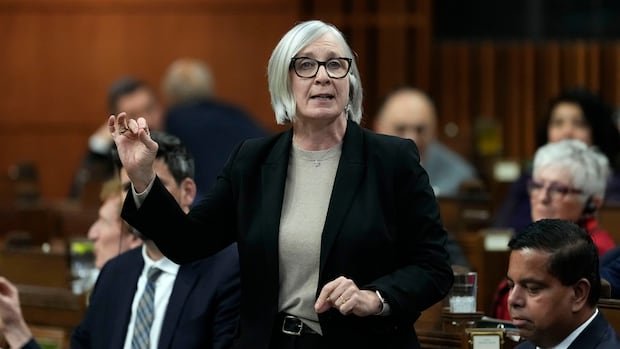

Jobs Minister Patty Hajdu has expressed the need for additional information from airlines and unions to address recent claims of unpaid work within the airline industry. The federal government recently released initial findings from an investigation launched six months ago following allegations arising during collective bargaining between Air Canada and its flight attendants’ union.
Over 10,000 Air Canada flight attendants went on strike in August 2025, causing disruptions to travel plans for numerous passengers. A key issue in the labor dispute was the assertion by the Air Canada section of the Canadian Union of Public Employees that flight attendants were not being compensated for certain tasks, such as ground duties.
Employers in federally regulated sectors like the airline industry are required to pay employees at or above the federal minimum wage threshold. Despite not finding evidence of inadequate compensation practices in the airline sector during the initial phase of the investigation, the report highlighted the need for a closer examination of compensation practices for part-time and entry-level flight attendants.
While speaking to The Canadian Press, Hajdu mentioned that stories from union members about instances of incomplete compensation for delayed flights could not be fully substantiated by pay records. Consequently, both unions and employers were requested to provide more detailed data on pay, but the information provided was deemed insufficient to reach a definitive conclusion on the validity of the claims.
The Canadian Union of Public Employees expressed disappointment in a statement, suggesting that the investigation seemed to overlook issues of unpaid work by major airlines. Although the probe was triggered by the Air Canada labor dispute, it encompassed the entire Canadian airline sector.
Hajdu noted one instance in a small northern airline where underpayment was observed, with the employer collaborating with her department to rectify the situation. The compensation framework for most flight attendants in the industry operates on a credit-based model, accounting for time in the air alongside additional benefits that contribute to the overall compensation package.
A meeting is scheduled later this month in Ottawa with airline and union representatives to review minimum wage requirements in detail. Airlines have been urged to conduct self-audits on pay records to ensure compliance with the Labor Code. While airlines like Air Canada and Porter Airlines have welcomed the investigation’s outcomes, CUPE’s airline division president expressed skepticism, questioning the reliance on airlines to act responsibly without stronger measures in place.
The federal government emphasized a collaborative approach with unions and airlines but indicated readiness to enforce orders or penalties if either party fails to uphold their obligations. Ongoing discussions between Air Canada, the union, and the Canada Industrial Relations Board are expected to shed light on wage requirements and foster improved relationships between labor groups and employers within the sector.