
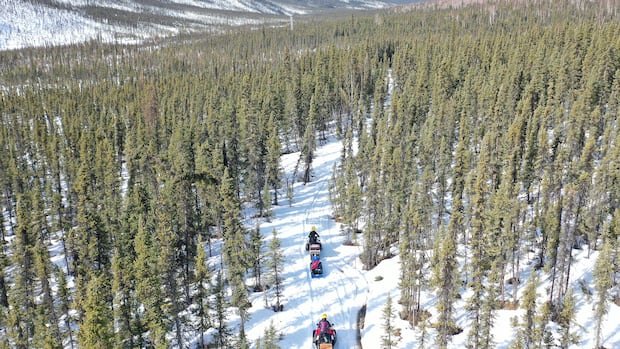

A known fact about trees is their unique ability to store carbon dioxide, using it for growth. Young, fast-growing trees are more efficient in absorbing carbon compared to mature trees. However, this carbon storage is temporary as when trees decompose or burn in wildfires, the stored carbon is released back into the atmosphere.
A team of researchers from the UK, Switzerland, and the Czech Republic has proposed an innovative idea to submerge mature trees from the expansive boreal forest into the deep Arctic Ocean to sequester their carbon for centuries. Their study, published in the online peer-reviewed journal npj Climate Action, utilized computer modeling to analyze the impact of removing specific stands of old, fire-prone trees in Canada, Alaska, and Russia. The plan involves floating these trees down six Arctic rivers, including the Yukon and Mackenzie, and sinking them in the Arctic Ocean. Simultaneously, new fast-growing trees would be planted to enhance carbon absorption from the atmosphere.
The researchers also recently discovered well-preserved 8,000-year-old trees in low-oxygen Alpine lakes, indicating that the cold, low-oxygen environment in the Arctic could effectively preserve carbon for thousands of years. According to their findings, implementing this strategy in three 10,000-square-kilometer areas annually could potentially remove one gigaton of carbon dioxide from the atmosphere each year.
Despite the potential benefits of carbon storage, the large-scale project raises concerns regarding the energy and carbon emissions required for execution. Transportation of logs from forests to rivers, floating them downstream, and sinking them in the Arctic Ocean all demand significant energy inputs. Additionally, the impact on ocean floor organisms, disturbance to forest ecosystems, and implications for Indigenous communities residing in these areas must be considered.
This initiative is part of broader geoengineering concepts aimed at mitigating escalating carbon emissions. While such innovative solutions offer potential, addressing the root cause of the issue, which is fossil fuel combustion, remains crucial. Transitioning to sustainable energy sources like solar, wind, nuclear, and tidal power presents viable alternatives to curb emissions effectively. Embracing these clean technologies is vital for combating climate change and creating a sustainable future.