
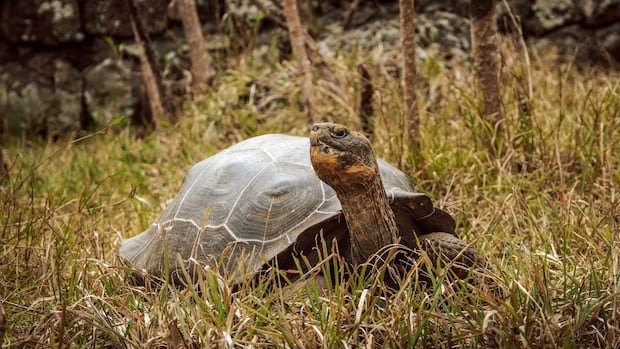

In a remarkable ecological milestone, giant tortoises have made a comeback to Floreana Island in the Galápagos archipelago of Ecuador after an absence of over 180 years. Through a captive “back breeding” effort initiated in 2017, a total of 158 juvenile hybrids were reintroduced to the island, which was once inhabited by an estimated 20,000 giant tortoises before their extinction in the 1840s due to whalers, a devastating fire, and human exploitation.
Conservation biologist James Gibbs likened the event to witnessing his own children’s first steps, expressing joy as the energetic young tortoises eagerly explored their new surroundings upon release. These juveniles, expected to reach weights of up to 600 pounds in the next couple of decades, are part of a larger group of 700 tortoises planned for gradual release on Floreana. Notably, these juveniles carry a significant genetic resemblance, ranging from 40% to 80%, to the extinct Floreana species, Chelonoidis niger.
The reintroduction of these giant tortoises, aged between eight and 13 and weighing 30 to 50 pounds, holds significance beyond population restoration. Biologist Washington Tapia emphasized the importance of reviving a lost genetic lineage on the island, highlighting the broader ecological impact these tortoises can have over their potentially century-long lifespans.
The release process involved a laborious journey for the release team, who transported the hefty juveniles from the ship to secure release sites across the island’s diverse landscapes. Divided into two groups, the tortoises were placed in different environments, with expectations that they would adapt and thrive in their newfound habitat alongside the island’s existing flora and fauna.
Despite the challenges posed by non-native species and environmental threats, efforts are being made to ensure the safety and well-being of the reintroduced tortoises. Equipped with GPS trackers, researchers will closely monitor the tortoises’ movements in real-time, ensuring their successful acclimatization to their “new” old home on Floreana Island.