
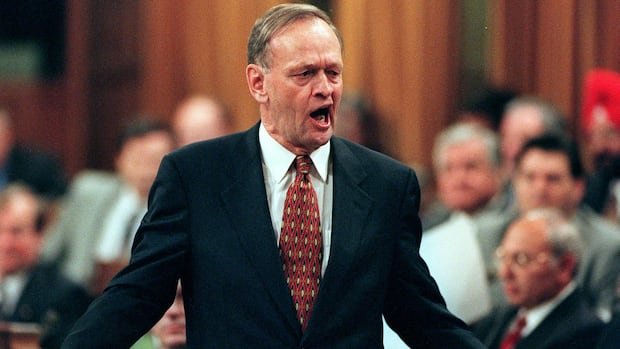

Six days prior to the tense 1995 Quebec referendum that almost caused a division in the country, Jean Chrétien advised his ministers to remain composed. The Prime Minister acknowledged the possibility of Quebec voting for separation from Canada on October 30. He emphasized that it was not the appropriate time to deliberate on the aftermath of an independence vote but urged everyone to stay calm and avoid hasty reactions.
The disclosure of this solemn message, shared in a closed-door meeting, comes from recently revealed federal cabinet minutes obtained by The Canadian Press. The minutes shed light on the shift in discussions at the federal cabinet table as Canada faced a crisis in national unity three decades after the referendum.
The documents, made public through access to information regulations, provide insights into a pivotal moment in Canadian history. They depict a campaign that was abruptly derailed, a Prime Minister urging his cabinet to maintain composure, and a frantic effort to preserve the country’s unity.
During the meeting preceding the vote on October 24, 1995, Chrétien indicated that he would take a more prominent role in the campaign. Up to that point, he and other federal officials had mainly stayed on the periphery as the campaign was led by the Quebec Liberal leader.
Chrétien highlighted the seriousness of the situation while cautioning his ministers against becoming excessively distressed. In the days leading up to the referendum, the federalist campaign witnessed a decline in its polling advantage as Lucien Bouchard energized support for Quebec’s secession.
According to the minutes, several non-Quebec ministers expressed frustration at being sidelined in a debate that could profoundly impact the nation’s future. They stressed the importance of Chrétien’s increased involvement and sincere communication. The Prime Minister announced that he would deliver a televised address to the nation the following day.
The remarks made by Chrétien during the October 24 meeting contrasted with discussions in cabinet meetings preceding the campaign, where the Prime Minister had at times questioned the likelihood of an independence vote taking place.
In the end, the federalists narrowly won the referendum with 50.58% of the vote. The day after, Chrétien reminded his ministers to project a positive attitude publicly and in front of the media, portraying the referendum outcome as a victory for Canada.
Then-deputy Prime Minister Sheila Copps remarked in a recent interview, “Had he not intervened … I think we would have lost the country.”
The 1995 referendum campaign officially commenced on October 2, although it had unofficially started months earlier. Quebec Premier Jacques Parizeau had pledged to hold a referendum within a year after his 1994 election, initiating public consultations in early 1995 to garner support for independence.
At the time, Chrétien instructed his cabinet to maintain calm and avoid overreacting. He stated in January that the referendum campaign was still distant, and little could be done at that moment. The “No” campaign would be spearheaded by provincial Liberal leader Daniel Johnson, not the Prime Minister, as Chrétien, who lacked popularity in Quebec, was advised to stay out of it.
In the spring, the separatist movement faced internal discord as leaders debated the referendum ballot question. Parizeau favored a clean break from Canada, while Bouchard, then leader of the Bloc Québécois, believed Quebecers required the promise of an economic partnership with Canada to vote for independence.