
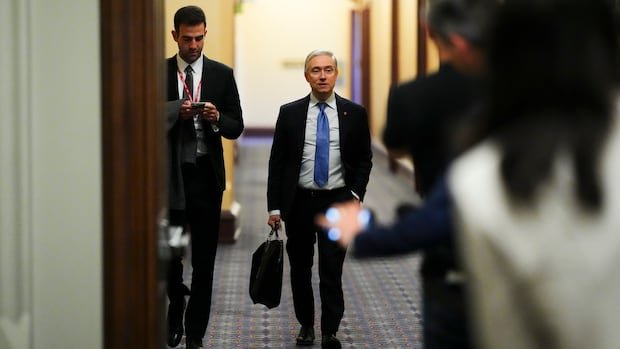

According to Finance Minister François-Philippe Champagne, a recent report from the International Monetary Fund highlights that while the global economy is displaying resilience in the face of U.S. tariffs, trade uncertainty remains a significant hindrance.
Champagne is currently in Washington attending the fall meetings of the G7 and G20 finance ministers, along with the annual gatherings of the International Monetary Fund and World Bank Group.
In an interview with The Canadian Press at the IMF headquarters in Washington, Champagne emphasized the importance of stability and predictability in the world economy, with Canada being a key player in achieving these goals.
He added that amidst various global economic challenges, the focus is on how the G7 nations can collaboratively reduce uncertainty levels.
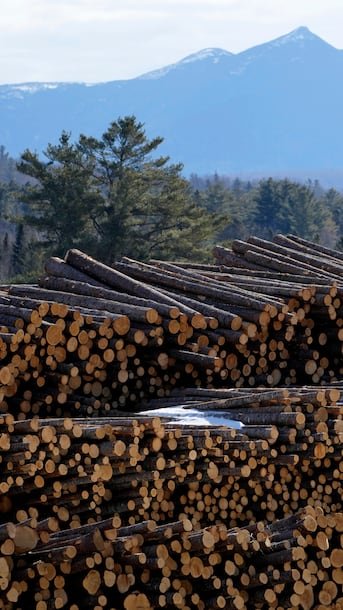
New tariffs announced last month by U.S. President Donald Trump are now in effect, including a global 10 per cent levy on softwood lumber and timber imports. Trump says the tariffs are meant to protect domestic manufacturing, but some critics say the levies could raise housing costs for U.S. consumers.
The IMF’s latest assessment indicates that global growth, although slow, is more favorable than previously anticipated. However, the report warns that substantial U.S. tariffs still pose risks, and the overall economic landscape remains volatile.
Projections show a decrease in global growth from 3.3 per cent in 2024 to 3.2 per cent in 2025 and further down to 3.1 per cent in 2026.
“Risks lean towards the downside,” stated the IMF report, highlighting that prolonged uncertainty, increased protectionism, and labor supply disruptions could impede growth. Additionally, fiscal vulnerabilities, potential financial market corrections, and institutional erosion could jeopardize stability.
Canada has been significantly impacted by the tariffs imposed by U.S. President Donald Trump, with the IMF estimating a slowdown in growth to 1.2 per cent this year.
The IMF projects that Canada could reclaim