
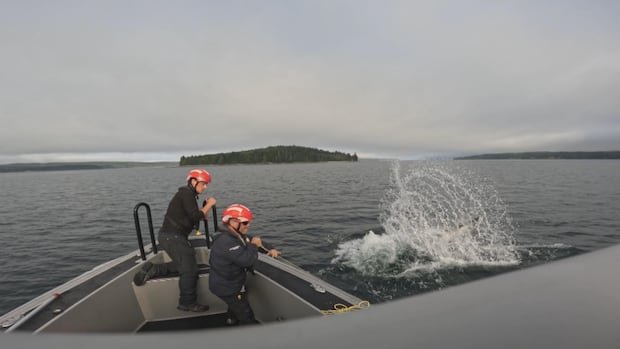

Humpback whales face a higher risk of getting tangled in fishing gear during periods of increasing ocean temperatures, leading to the shrinking availability of cold-water habitats, as per recent findings revealed on Wednesday. The research, conducted off the U.S. West Coast by the National Oceanic and Atmospheric Administration and published in the peer-reviewed journal PLOS Climate, emphasized that the reduction in cold-water habitat poses a more significant threat to entanglement risk than the rising humpback population.
The cold-water habitat is crucial for humpbacks as it fosters abundant marine life like krill and small fish, essential for the whales’ sustenance, explained Geoff Shester, a senior scientist at ocean conservation organization Oceana. However, the beneficial cold water from the ocean depths can be displaced by marine heat waves, a consequence of climate change, leading to habitat compression and limiting feeding areas for the whales. This compression coinciding with fishing zones heightens the probability of entanglement incidents.
Andrew Trites, director of the Marine Mammal Research Unit at the University of British Columbia, highlighted the severe consequences of entanglement for humpback whales, noting their struggles to free themselves once ensnared, often resulting in tragic outcomes.
The research team, led by NOAA scientist Jarrod Santora, identified a surge in reported humpback entanglements off the West Coast, with numbers tripling from 2014 to 2024, peaking above 40 during the 2015-2016 “blob” marine heatwave. Their analysis linked entanglements to decreased cold-water habitat areas rather than solely population growth, emphasizing the significance of habitat conditions in entanglement occurrences.
The researchers introduced a predictive tool, the Habitat Compression Index, capable of forecasting ocean conditions up to a year in advance. This index aids in identifying high-risk entanglement periods and locations, enabling authorities to implement fisheries closures as a preventative measure. Moreover, advancements like ropeless fishing gear offer a promising solution to mitigate entanglement risks, allowing fishermen to operate in closed areas without endangering marine life.
Overall, the study underscores the critical need to address the impact of climate-induced changes on marine habitats to safeguard vulnerable species like humpback whales from entanglement risks.