
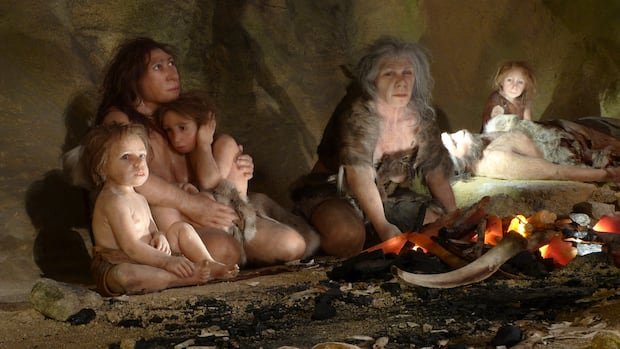

A recent genetic study suggests that Neanderthals predominantly inherited modern human DNA from the females in their lineage. Researchers from the University of Pennsylvania reached this conclusion by analyzing the distribution of anatomically modern human (AMH) and Neanderthal DNA in the X chromosomes of Neanderthals. The study, published in the journal Science, sheds light on the social dynamics of ancient populations, according to Sarah Tishkoff, a genetics and biology professor.
Neanderthals and modern humans interbred when they crossed paths in Europe and Asia, leading to the presence of Neanderthal DNA in non-African human ancestry. The study focused on the X chromosome, which men possess only one of, unlike other chromosomes that come in pairs for both sexes. By comparing the X chromosomes of ancient Neanderthal women and modern human women from sub-Saharan Africa, researchers found significantly higher levels of human DNA in the Neanderthal X chromosomes.
The researchers explored possible explanations for this phenomenon, ruling out the idea that human genes on the X chromosome outperformed Neanderthal genes. Instead, they proposed that mating dynamics, where individuals with varying ancestries paired unequally, could have led to the observed distribution of human DNA. This unequal pairing, particularly favoring human ancestry in females, could have influenced the genetic makeup of Neanderthals over generations.
The study highlights the complexities of Neanderthal-human interactions, suggesting that various factors such as mate preferences, migration patterns, and natural selection might have contributed to the observed biases in Neanderthal X chromosomes. Previous research has indicated potential challenges for Neanderthal-human hybrid offspring, including health issues and reduced fertility, which could have influenced mating preferences among ancient populations.
Damian Labuda, a retired professor at the University of Montreal, praised the study’s findings and suggested that Neanderthals may have been attentive to the outcomes of different pairings, shaping their mating behaviors based on observed consequences. The study provides insights into the intricate genetic legacy of Neanderthals and their interactions with modern humans.