
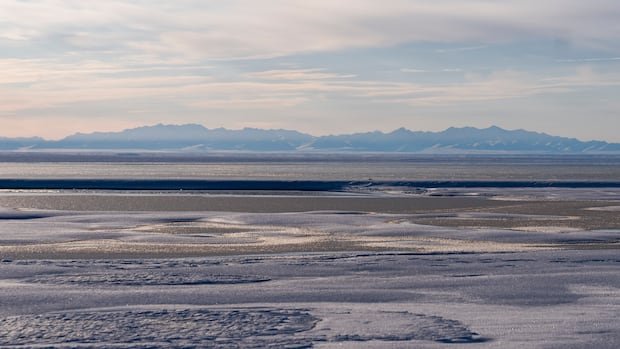

The Trump administration has officially approved the opening of the coastal plain of Alaska’s Arctic National Wildlife Refuge for potential oil and gas drilling. This decision has reignited a longstanding debate on whether drilling should be allowed in this vital environmental area.
U.S. Interior Secretary Doug Burgum disclosed the decision, clearing the path for upcoming lease sales within the refuge’s 631,309-hectare coastal plain, a region held sacred by the Indigenous Gwich’in people. This move fulfills earlier promises by President Donald Trump and congressional Republicans to resume development activities in this part of the refuge. As part of Trump’s legislation, which included tax breaks and spending cuts, at least four lease sales within the refuge are expected to take place over the next decade.
Accompanied by Alaska Republican Gov. Mike Dunleavy and the state’s congressional delegation in Washington, D.C., Burgum also announced the restoration of oil and gas leases in the refuge that had been canceled by the previous administration. A federal judge had previously ruled that the Biden administration lacked the authority to cancel these leases, which were acquired by a state corporation during a lease sale at the end of Trump’s first term.
The Indigenous Gwich’in communities near the refuge view the coastal plain as sacred due to its significance to a caribou herd crucial for their livelihood. They strongly oppose any drilling in the area. Conversely, leaders of Kaktovik, an Inupiaq community within the refuge, support drilling as they believe responsible oil development is essential for their region’s economic prosperity.
In response to Thursday’s announcement, Charles “CC” Lampe, President of Kaktovik Inupiat Corp., expressed optimism, stating, “It is encouraging to see decision-makers in Washington advancing policies that respect our voice and support Kaktovik’s long-term success.”
Despite a second lease sale in the refuge during President Joe Biden’s term that attracted no bidders, critics argued that the sale’s terms were overly restrictive. Meda DeWitt, Alaska senior manager at The Wilderness Society, criticized the administration’s decision, asserting that it prioritizes corporate interests over the well-being and cultural significance of the Indigenous communities and the survival of the Porcupine caribou herd.
The actions announced on Thursday align with Trump’s outlined plans upon his return to office in January, which also included initiatives to expedite the construction of a road connecting the King Cove and Cold Bay communities. A land exchange deal, announced by Burgum, was finalized to facilitate the construction of this road passing through the Izembek National Wildlife Refuge. Residents of King Cove have long advocated for this connection as it is crucial for accessing emergency medical services.
Although conservationists have vowed to legally challenge the agreement, citing concerns about the impact of the road on migratory birds, the project has garnered support from Dunleavy and the congressional delegation, who view it as a critical public safety measure. The Center for Biological Diversity raised objections to the land exchange, emphasizing the importance of protecting wilderness lands within the refuge and expressing worries about the potential harm to migratory birds relied upon by tribal communities in the Yukon-Kuskokwim Delta region.
In response to the decision, Cooper Freeman, the center’s Alaska director, stated, “Along with the Native villages of Hooper Bay and Paimiut, we absolutely plan to challenge this decision in court.” U.S. Sen. Lisa Murkowski, a Republican, emphasized the necessity of building the road with minimal disruption to the refuge’s ecosystem, highlighting the refuge’s significance as a critical habitat for waterfowl.
Murkowski clarified that the proposed road is intended to be an 11-mile, one-lane gravel road for non-commercial use, stressing the importance of balancing infrastructure development with environmental conservation.