
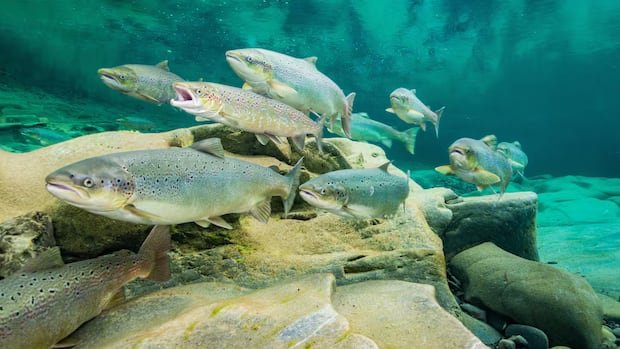

A dispute over salmon funding is unfolding in Atlantic Canada, involving fish farmers and the Atlantic Salmon Federation, a conservation organization. The conflict revolves around the allocation of over $80 million in new federal funding designated to stabilize and rebuild wild Atlantic salmon populations.
The tension became public when the executive director of the Atlantic Canada Fish Farmers Association, Tom Taylor, penned a letter to Prime Minister Mark Carney and Fisheries Minister Joanne Thompson. In the letter, Taylor urged that the federation should not receive any portion of the new $81.7-million federal fund aimed at supporting wild Atlantic salmon restoration efforts, as he labeled the federation as a “foreign-funded, activist organization” with intentions to harm the farmed salmon industry.
According to Taylor, the federation has been promoting campaigns, such as “Off the Table,” which aims to persuade the hospitality industry to remove farmed salmon from menus by spreading misleading information about farmed salmon’s environmental and health impacts.
In response, Neville Crabbe, the vice-president of communications for the Atlantic Salmon Federation, emphasized that their organization’s criticisms are focused on the negative environmental effects of fish farming and that they are not seeking to shut down the industry entirely but rather oppose its geographic expansion.
Both sides are entrenched in their positions, with Taylor emphasizing the economic significance of the salmon farming industry in Atlantic Canada and the conservation efforts being carried out by various groups. The federation, on the other hand, views wild Atlantic salmon as a vital species for ecosystem health and cultural heritage in the region.
The federation has already announced plans to supplement the government funding with $25 million raised from individuals and foundations. Despite the ongoing conflict, both sides aim to preserve their respective interests in the salmon industry.