
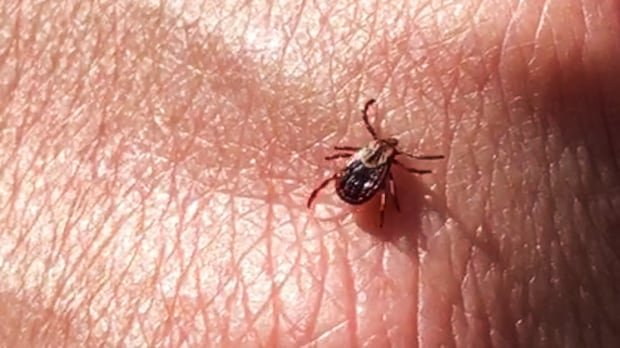

A recent study conducted by researchers at the University of Ottawa has revealed that the application of woodchips on trails in forested areas can lead to a significant decrease in local tick populations. This finding indicates that a simple, low-tech approach could help reduce the risk of tick bites and consequently lower the chances of contracting Lyme disease for individuals walking in wooded areas.
The research team selected two locations within Ottawa’s Greenbelt for their study: the Mer Bleue sector in the east and the Stony Swamp sector in the west. Across 20 trail sections, each measuring 50 meters in length, the researchers applied untreated woodchips and woodchips treated with the pesticide deltamethrin.
Results showed that using untreated woodchips led to a 50% reduction in tick numbers, while the application of woodchips treated with the pesticide resulted in a 99% decrease, as reported by Katarina Ost, a member of the research team, during an interview with CBC Radio’s Ottawa Morning.
Effectiveness of Woodchips
Woodchips serve as an effective deterrent against ticks because these parasitic arachnids typically climb on vegetation, such as grass, to attach themselves to hikers or their pets. By placing woodchips on the trails, the growth of the vegetation that ticks rely on for climbing is impeded.
According to Ost, woodchips are particularly suitable for wide, heavily trafficked trails with high tick densities, making them an ideal solution for broader implementation.
Addressing concerns about the pesticide’s impact, Ost assured that deltamethrin does not pose a risk to pets walking on the treated woodchips, as the pesticide remains relatively stationary once applied.
For home tick prevention, the federal government recommends creating a barrier of wood chips, mulch, or gravel around the yard to create an inhospitable environment for ticks to thrive. Dr. Christopher Labos, a cardiologist and epidemiologist at McGill University, emphasized the importance of controlling tick populations to prevent the transmission of tick-borne diseases.
While reducing tick numbers is a positive step, further studies are needed to establish a direct link between tick reduction and a decrease in Lyme disease cases, according to Labos. Confirming this correlation would validate the effectiveness of tick population control measures.
Labos emphasized the need to adhere to standard precautions, such as wearing protective clothing, using insect repellent, and conducting tick checks after outdoor activities, especially for individuals venturing off designated paths.
Overall, the study underscores the potential of woodchips as a practical and eco-friendly method to combat tick populations, highlighting the importance of proactive measures in tick-borne disease prevention.