
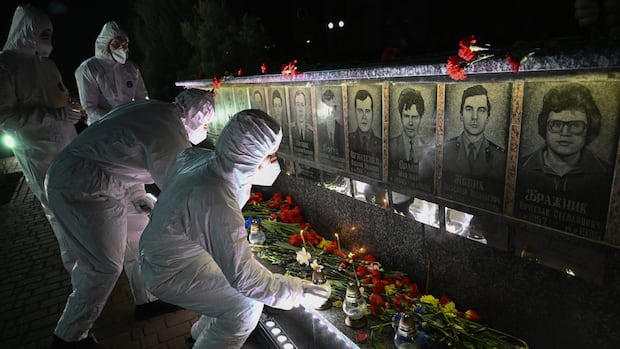

On Sunday, Ukraine marked the 40th anniversary of the Chornobyl disaster, with concerns that Russia’s ongoing war could lead to a recurrence of the world’s most severe nuclear incident, which resulted in numerous fatalities and severe environmental repercussions.
The commemoration of the disaster — which released radioactive substances across a vast region of Europe while Soviet officials attempted to downplay its severity — has gained significant relevance amid Russia’s invasion of its smaller neighbor.
According to Kyiv, Russian forces have frequently launched missiles and drones along a flight path close to the plant to target Ukrainian cities, even damaging an essential protective cover during an assault last year.
Additionally, Russian troops are currently stationed at Ukraine’s Zaporizhzhia nuclear power station in the southeast, which Kyiv’s state atomic agency reported on Sunday has experienced its 15th temporary blackout since Kremlin forces assumed control in March 2022.
On the anniversary, foreign dignitaries, including the EU energy commissioner, visited Kyiv to honor the occasion and reaffirm their commitment to supporting Ukraine’s energy infrastructure, which faces regular attacks from Russian air strikes.
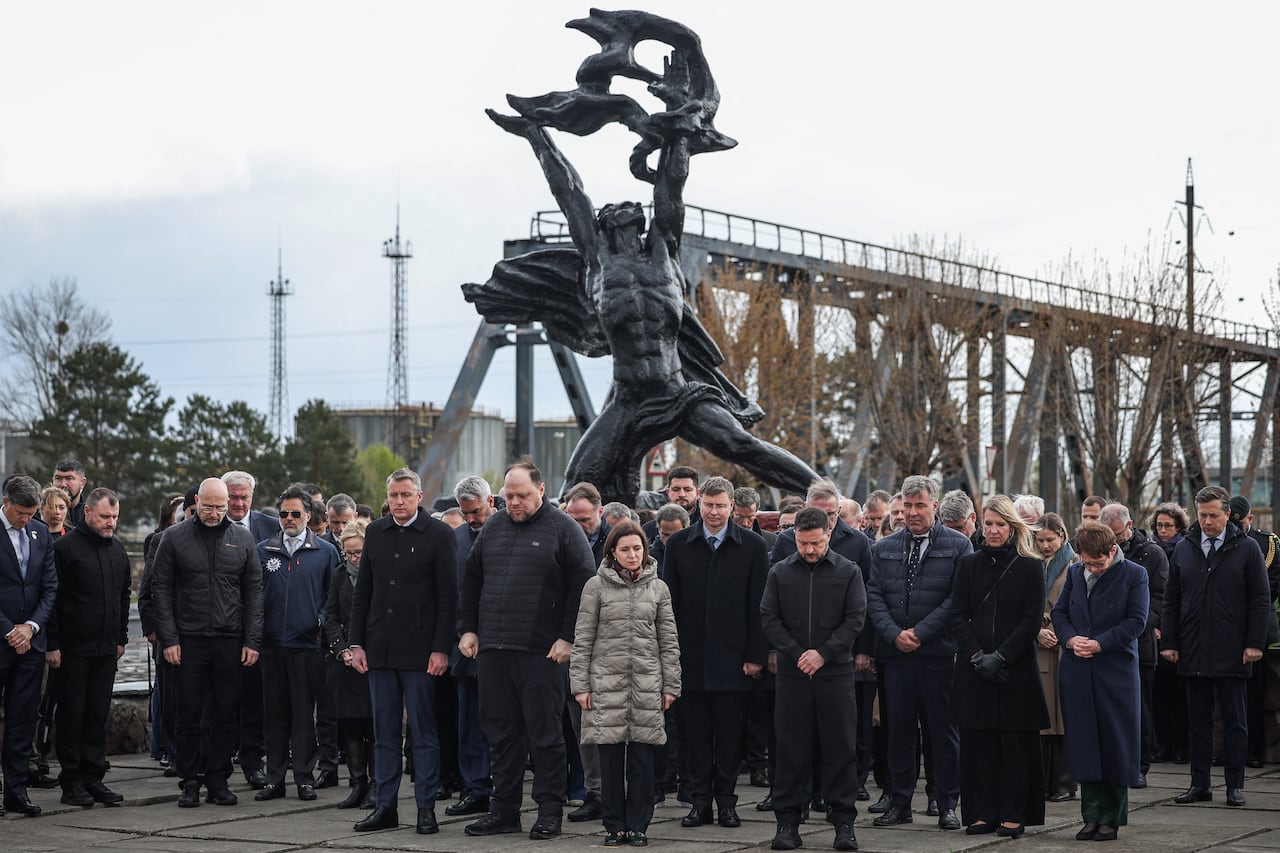
A gathering of foreign officials and Ukrainian representatives, including President Volodymyr Zelenskyy, took part in a ceremony in Chornobyl to mark the 40th anniversary of the disaster on Sunday. (Alina Smutko/Reuters)
Ceremonies were held in a somber atmosphere in both Kyiv and at the Chornobyl plant itself — which was occupied briefly during the initial weeks of the conflict — where President Zelenskyy lit a candle alongside the visiting president of Moldova and other dignitaries.
“Currently, the risks are equally significant due to Russia’s actions regarding our Zaporizhzhia nuclear power station and generally with our energy resources and territory,” Zelenskyy stated to reporters in Kyiv.
Damage from War
A Russian drone attack in February 2025 caused a breach in a large protective dome that was erected over part of the Chornobyl facility in 2016 to safeguard a sarcophagus constructed in 1986 to contain radioactive debris. Fortunately, no leaks were reported, and crews have repaired the damage.
However, the dome requires at least 500 million euros’ worth of substantial repairs to avert irreversible harm, as stated by the European Bank for Reconstruction and Development, which is assisting in raising funds for the initiative.
During his address in Kyiv on Sunday, Rafael Grossi, the director general of the International Atomic Energy Agency, emphasized the urgency of commencing repairs without delay.
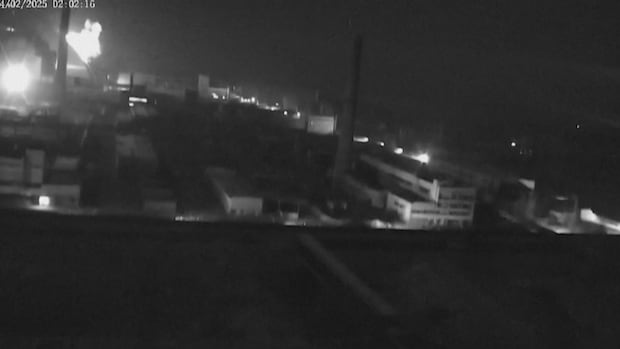
Video footage shared by Ukrainian President Volodymyr Zelenskyy on social media shows a strike on the external protective shell of the nuclear facility.
Kyiv’s chief state prosecutor informed Reuters that Ukrainian radar systems had identified at least 92 Russian drones that traversed within a five-kilometer radius of the protective dome since June 2024.
Since Russia’s full-scale invasion, nuclear energy has become fundamental to Ukraine’s energy framework, constituting about 70 percent of the total electricity production, as reported by state-owned Energoatom.
The management of the Zaporizhzhia facility, the largest in Europe, is one of the primary contentious issues in peace negotiations between Kyiv and Moscow, which have yielded limited results under U.S. mediation.
Enduring Impacts
The accidental explosion and subsequent meltdown in reactor four at the Soviet-designed Chornobyl plant in the early hours of April 26, 1986, exposed millions to radiation, forced hundreds of thousands to evacuate, and contaminated extensive areas of land.
Many have since died from illnesses related to radiation exposure, such as cancer, although the overall death count and long-term health implications remain hotly debated.
On Sunday, Pope Leo remarked that the Chornobyl disaster has left a lasting impression on humanity’s shared consciousness, urging that nuclear energy “should always be utilized to promote life and peace.”
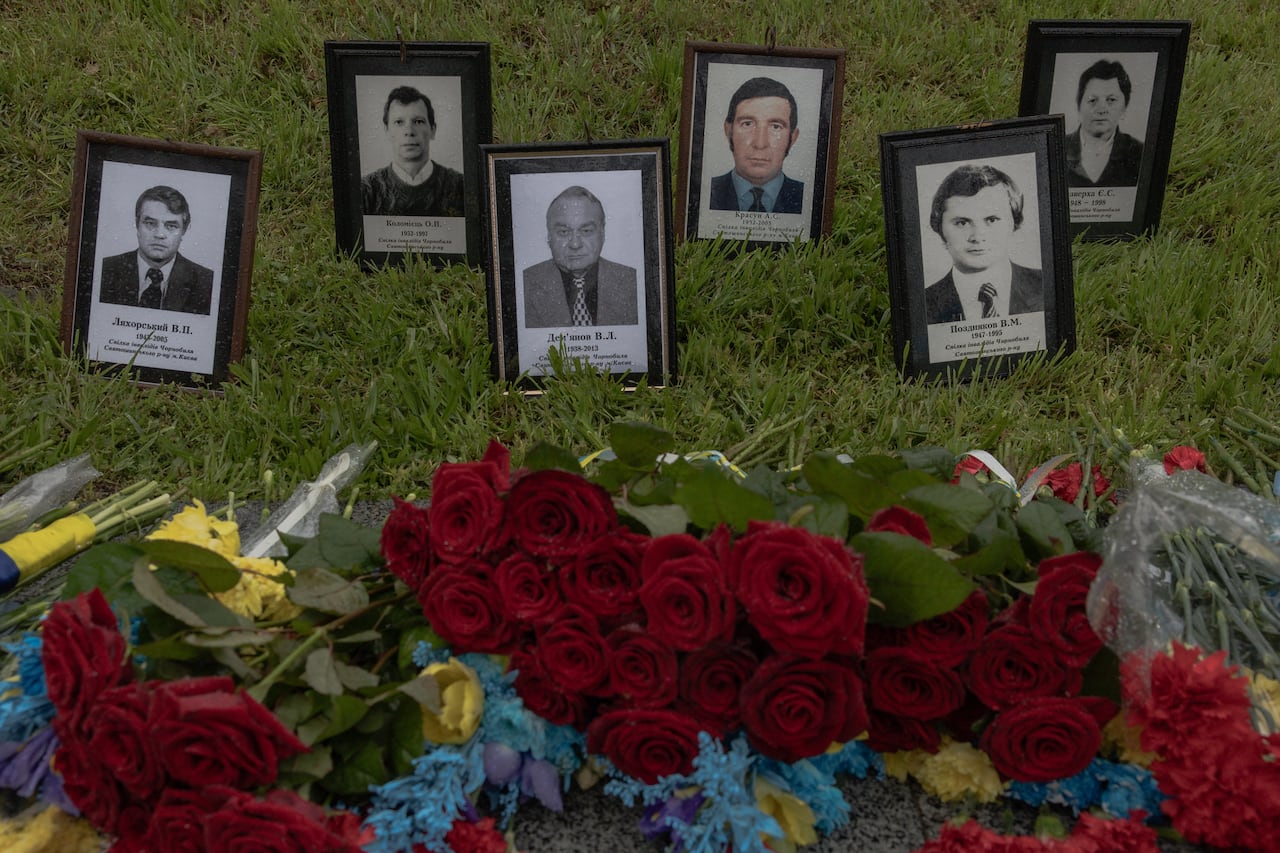
Memorial portraits are displayed in Kyiv on Sunday to honor victims of the Chornobyl disaster. (Roman Pilipey/AFP/Getty Images)
Serhii Balashov, a cleanup worker, told Reuters that Soviet officials attempted to conceal the aftermath of the disaster even from those who were instrumental in managing it.
“They never even acknowledged the connection between our health issues and our presence in Chornobyl for the cleanup,” he remarked during the memorial event in Kyiv.
Located approximately 100 kilometers north of Kyiv and surrounded by a 2,600-square-kilometer exclusion zone, the plant — which Reuters visited on Wednesday — is now enveloped in an unsettling tranquility.
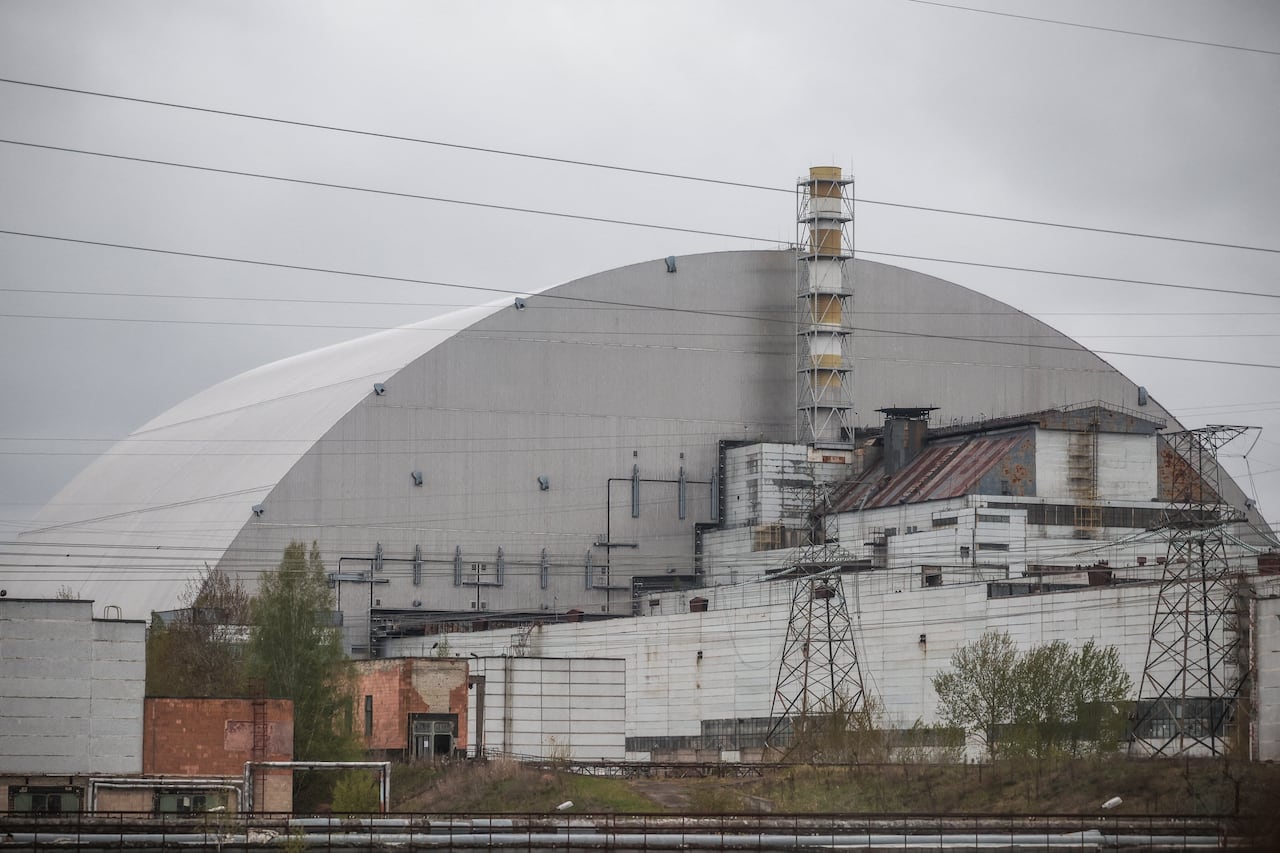
The New Safe Confinement structure is positioned over the old sarcophagus, which encases the remnants of the damaged fourth reactor, at the Chornobyl nuclear facility on Sunday. (Alina Smutko/Reuters)
National Guardsmen patrol the facility, where around 2,250 workers are engaged in multi-day shifts overseeing its gradual decommissioning. The last reactor at the plant was deactivated in 2000.
The control room for reactor four now resembles a shadowy area filled with twisted and rusting Soviet-era machinery.
Moose and wild horses have returned to the region surrounding the plant and the adjacent abandoned town of Prypiat, illustrating how nature has reclaimed the landscape in the absence of human activity.