
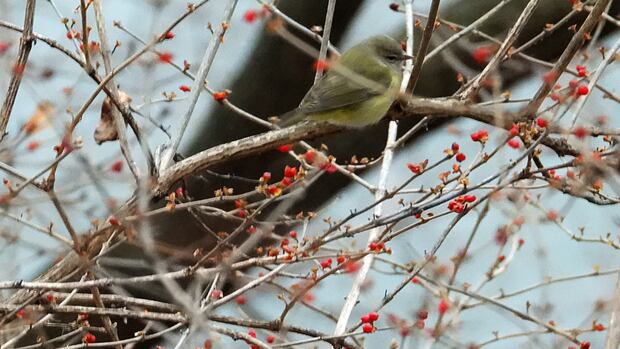

During the annual Christmas bird survey in Hamilton, an orange-crowned warbler was observed, which organizers noted is a “rarity” for bird enthusiasts.
Volunteer Bob Curry reported that he spotted the warbler close to Woodland Cemetery, located on the peninsula that stretches toward Carroll’s Point at Hamilton Harbour.
“I was positioned at the top of the north bank of the cemetery, peering down into the deep ravine,” Curry explained. “A bird appeared in the trees above me, smaller than the chickadees. As it descended and came closer, I recognized it as an orange-crowned warbler. It exhibited the typical dull greenish-yellow plumage with faint dusky streaks on the breast and yellowish under tail coverts.”
Curry described the bird as having a greyish head and neck, a light supercilium, or streak near its eye, along with a crescent-shaped eye ring. “I observed it for about 15 seconds,” he added.
Curry was one of many volunteers participating in the long-standing event held on December 26. According to the Hamilton Naturalists’ Club, it is one of the oldest Christmas bird counts in Canada, having commenced in 1921.
The club will forward the collected data to the National Audubon Society, a conservation organization that compiles bird count information from over 2,400 sites across the western hemisphere for further analysis.
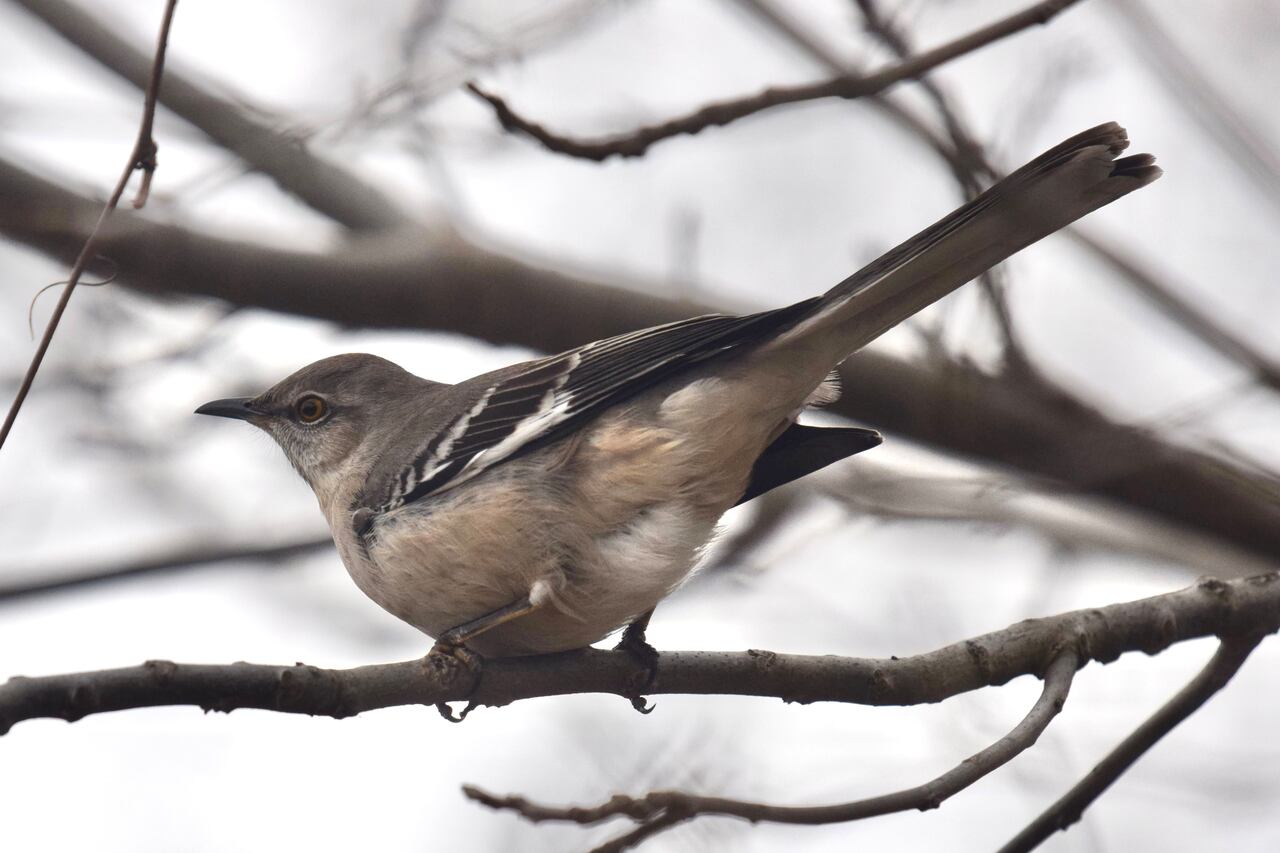
This northern mockingbird was among the many birds documented during the Hamilton Naturalists’ Club’s annual bird count on Boxing Day. (Ezra Campanelli)
Rob Porter, the director of the bird study group at Hamilton Naturalists’ Club, which coordinated the event, noted that there are entire winters in Ontario when no orange-crowned warblers are sighted, making this occurrence “quite rare.”
94 species counted during the survey
Porter indicated that a total of 94 species were identified on the day of the count, including some “uncommon” ones. He mentioned that volunteers recorded 12 hermit thrush, surpassing the previous record of 11 set in 2002. Typically, only one or two are found in most years, he noted.
-
Hamilton peregrine falcon chick faces uncertain future after 2 ‘mishaps’ in 9 days
-
After long-running Hamilton aviary closes, team pivots to new model to help tropical birds
“They breed in this area, but not during winter, and typically there exist only a few individuals in southern Ontario for the winter, such as isolated birds here and there,” Porter explained. “Every other year or so, we spot one of these.”
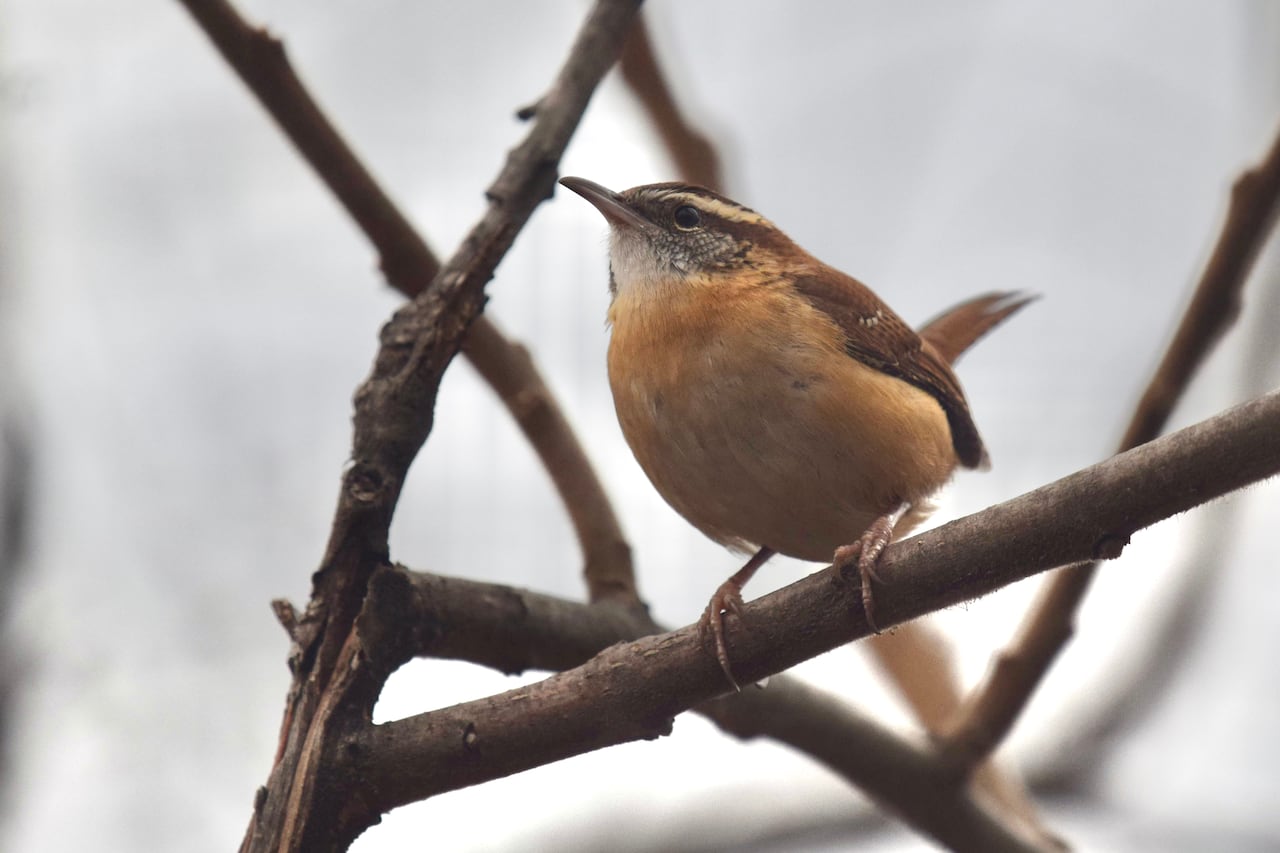
Twenty-six Carolina wren were recorded during the count, representing the lowest total for Hamilton Naturalists’ Club since 2005. (Ezra Campanelli)
Volunteers also noted 13 common ravens, with Porter mentioning that these first emerged in Hamilton in 2003. He stated that sightings in double digits have occurred for the past five years.
Several common yet noteworthy sightings were also reported during the count, including:
- Twenty-six Carolina wren, marking the lowest count for Hamilton Naturalists’ Club since 2005. Porter remarked that over the past few years, there have usually been more than 100 of these birds, but weather conditions may have caused them to be less visible.
- 211 trumpeter swans — a new count record. The previous record, set in 2010, was 193.
The Canada Goose was the most abundant species observed during the count, with a total of 5,664. The European starling was the most populous non-native songbird at 1,856. Among native songbirds, the dark-eyed junco was the most frequently seen with 808 individuals, while the red-tailed hawk was the most numerous raptor, totaling 54.
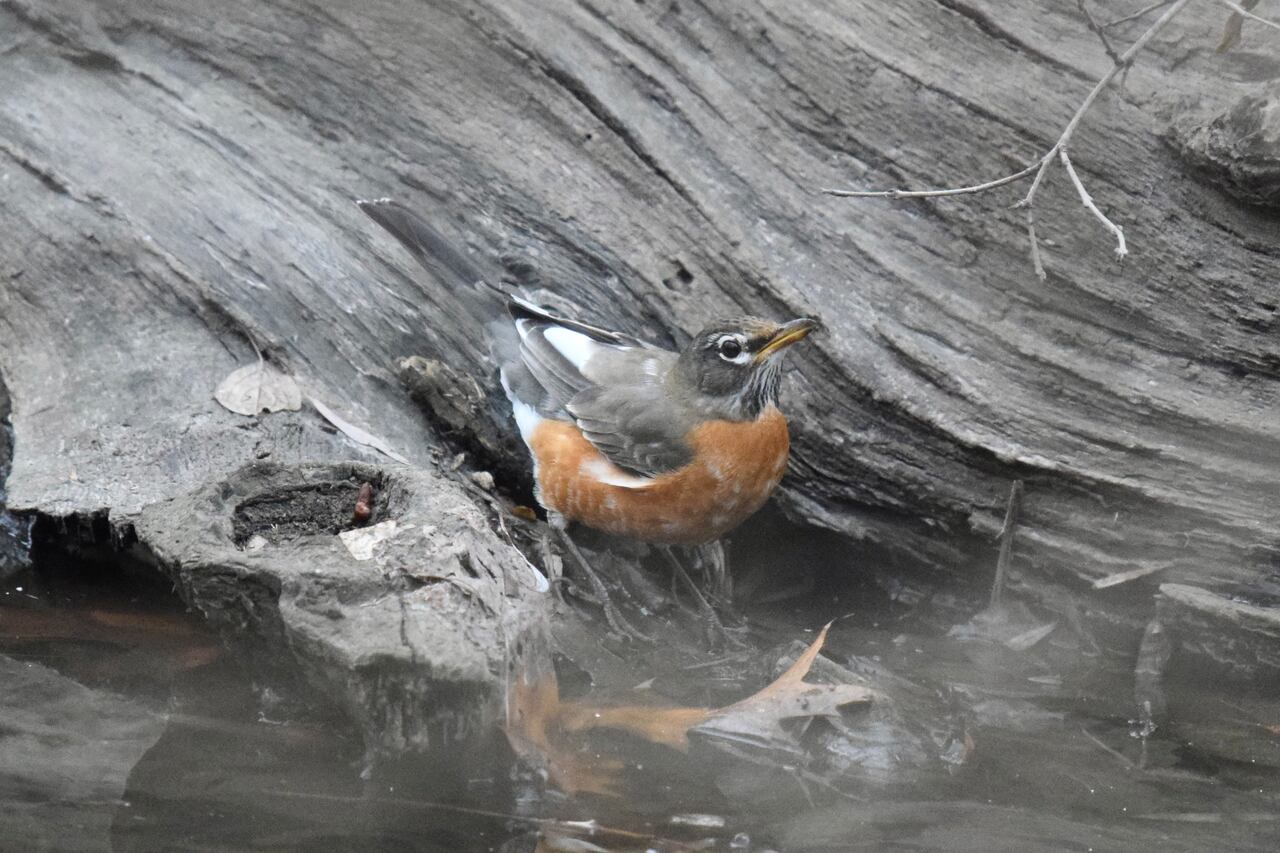
This American robin was noted during the count. (Ezra Campanelli)
The Christmas bird count, which originated in New York City in 1900, is conducted in designated count circles on a single day between December 14 and January 5.
Typically, Hamilton’s bird count occurs on Boxing Day. This year’s count circle extended into parts of Burlington, Ont., where Porter indicated a gray catbird, an “uncommon bird,” was spotted in Duncaster Park.
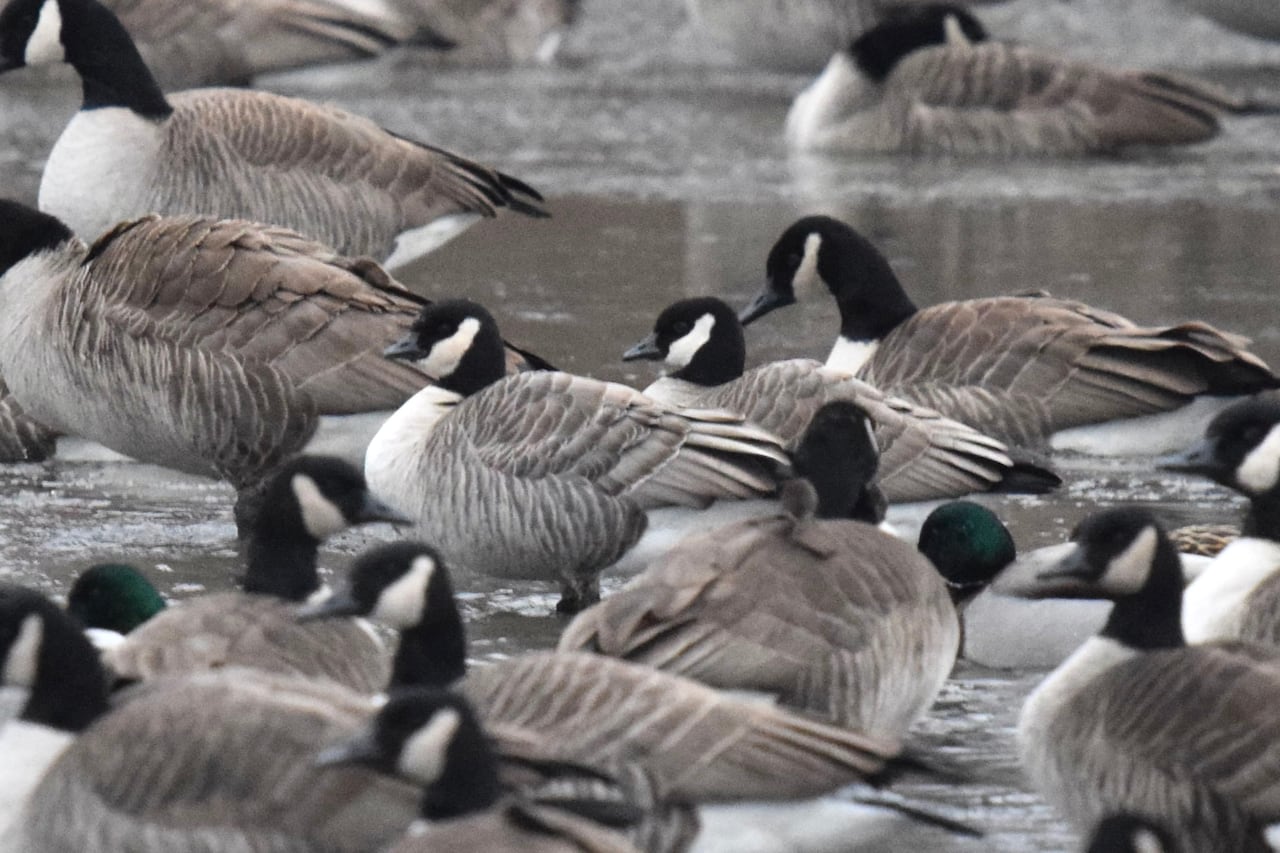
A group of cackling geese was observed during the Boxing Day bird count. (Ezra Campanelli)