
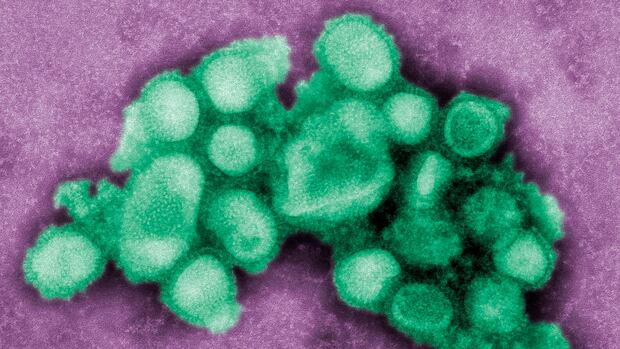

In the Waterloo region, there has been an early uptick in flu cases and hospitalizations, potentially driven by a new variant of the influenza virus.
The variant in question is a novel version of the H3N2 flu strain.
“Each year, the flu virus undergoes some mutations, and this strain of H3N2 is distinct from those we have encountered previously,” stated David Aoki, director of infectious disease and chief nursing officer for the Region of Waterloo, during an interview with CBC News. “As a result, we are witnessing a swift rise in cases, along with an increase in hospitalizations compared to recent years.”
Aoki noted that, in contrast to last year and the period following COVID, “this rise in cases is occurring much earlier than we have observed before.”
So far this flu season, a total of 503 cases have been documented, with 156 cases reported in the week ending December 20, just before the Christmas holiday, nearly a third of all cases recorded.
Nonetheless, Aoki remarked that it is “difficult to determine if this strain is the direct contributor to the increased hospitalizations.”
“We are still in the early stages of the flu season… we have yet to reach our peak,” he added. “It remains uncertain whether this will stabilize and level off, continue for another month, or if we will see a further increase in cases.”
Local Cases
Recent data from Public Health Ontario indicates that for the week ending December 13 in the Waterloo region:
- 130 flu cases were reported, rising by 56 from the prior week.
- 11 hospital admissions occurred, an increase of four from the previous week.
- One flu outbreak was reported for the week, along with one from the week prior.
- Eight COVID cases were reported, decreasing by two from the previous week.
Public Health Ontario also noted that the number of lab-confirmed influenza tests is “very high,” with a positivity rate of 27.8 percent for the week ending December 13.
For the area under the jurisdiction of Wellington-Dufferin-Guelph Public Health:
- 133 flu cases were recorded, a rise of 42 from the previous week.
- 19 hospital admissions were noted, down five from the previous week.
- No flu outbreaks were reported.
- Nine COVID cases were reported, an increase of four from the prior week.
Concern for Vulnerable Populations
Aoki indicated that, similar to other flu strains, this variation of the H3N2 virus can impact individuals of all ages, including those who are otherwise healthy.
However, he emphasized concerns for the “very young, the elderly, and individuals with pre-existing medical conditions that may render them more susceptible.”
“Our data indicates that the majority of cases thus far are among individuals older than 60, and also those younger than 12,” he explained.
Aoki mentioned that the current vaccines are not “a perfect match” for this new H3N2 strain, but vaccination remains the most effective way to guard against the flu.
<p“We know that even in years with a significant mismatch between the circulating strain and the vaccine, the vaccine still offers protection against severe outcomes like pneumonia, hospitalizations, and fatalities,” Aoki clarified.
“It remains your best line of defense.”
As New Year’s celebrations approach, Aoki advises individuals to take measures to prevent the spread of the virus by staying home when unwell, practicing good hand hygiene, covering their mouths while coughing, and wearing masks in enclosed spaces.