
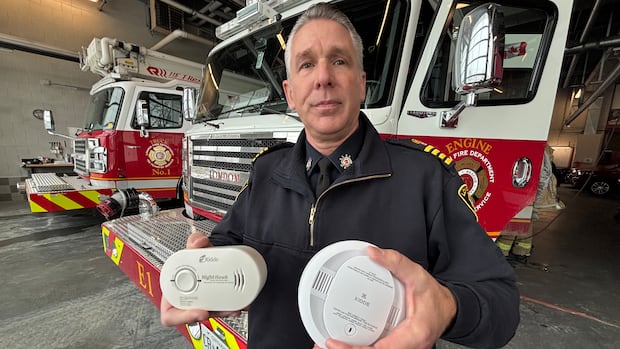

New regulations set to take effect in 2026 will require many homeowners and landlords in Ontario to include the installation of carbon monoxide alarms in their New Year’s resolutions.
Effective January 1, modifications to the Ontario Fire Code will mandate that a functioning carbon monoxide alarm be present on every level of residences equipped with gas-burning appliances, such as furnaces, water heaters, or stoves.
-
Carbon monoxide poisoning: 5 things to know about the ‘silent killer’
-
4 taken to hospital after carbon monoxide leak at multi-unit home in London
Under existing guidelines, which remain in place until the end of 2025, a carbon monoxide detector is only required to be positioned outside of sleeping areas.
Matt Hepditch, a deputy chief with the fire department in London, stated that the updated regulations aim to enhance safety against a hazardous gas that is invisible, odorless, and tasteless.
“The only way to know if there is carbon monoxide in your home is to have a carbon monoxide alarm installed,” he explained.
Carbon monoxide is generated when fuels like natural gas, gasoline, oil, propane, wood, or coal are combusted. In high concentrations, this gas hampers the body’s capacity to absorb oxygen, which can swiftly impair brain and organ function, potentially resulting in death.
The risks increase when combustion gases are not adequately vented to the exterior.
Individuals exposed to carbon monoxide frequently display flu-like symptoms, in addition to fatigue, shortness of breath, and diminished motor skills.
Depending on the level of concentration, carbon monoxide can induce unconsciousness rapidly, and fatalities can occur within minutes.
Commonly Missing or Malfunctioning Alarms
The Ontario Association of Fire Chiefs reports that carbon monoxide poisoning results in an average of over 50 deaths annually in Canada. The majority of victims succumbed while asleep, and nearly two-thirds of carbon monoxide poisonings occurred during the colder months of fall and winter.
Although a carbon monoxide detector serves as the most effective safeguard against accidental poisoning, Hepditch noted that London fire inspectors often discover both carbon monoxide and smoke alarms that are either malfunctioning or absent entirely.
“Unfortunately, we encounter this situation daily,” he remarked.
He emphasized that the holiday season presents an ideal opportunity to test both smoke and carbon monoxide alarms. Each device should be examined to confirm that the batteries are functional. Additionally, alarms have a designated lifespan, and older models may require replacement, regardless of their operational status.
“Fire does not take holidays; it doesn’t acknowledge the festive season or New Year’s, so it’s a good moment to ensure those alarms are in working order,” he added. “Test them before hosting guests.”
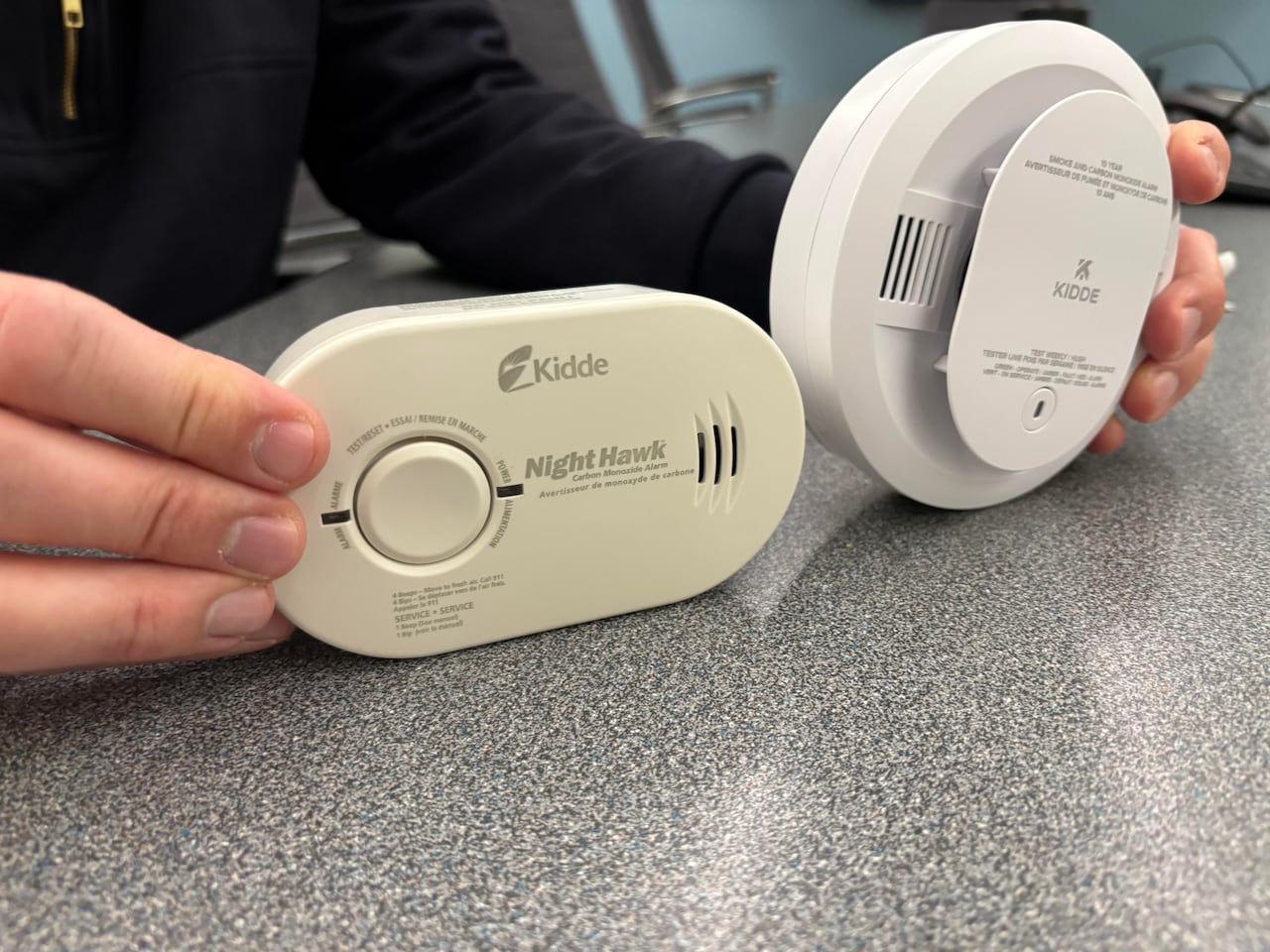
Two examples of common carbon monoxide alarms. The alarm on the left is a plug-in model; the one on the right is a ceiling-mounted unit. (Andrew Lupton/CBC News)
Regarding which alarm to purchase, Hepditch advised homeowners to ensure the device is certified for use in Canada. Health Canada provides guidelines here on what to look for, including the Canadian Standards Association (CSA) logo or the Underwriters Laboratories of Canada (ULC) mark.
Alarms can be powered by batteries or be hard-wired with a battery backup. There are also models that plug into standard electrical outlets.
Some models serve dual purposes, detecting both carbon monoxide and smoke.
Ivan Picott, general manager of Harris Home Hardware in London, Ontario, mentioned that the store is placing signage in the aisles to inform both staff and customers about the new regulations.
“Plug-in alarms with battery backup are quite popular,” Picott stated. He noted that plug-in models are generally more affordable (around $40) compared to ceiling-mounted units (approximately $75).
He also mentioned that plug-in electric models are more convenient for customers who may feel uneasy about using ladders.
Additional Recommendations
Distinct Sounds. Hepditch explained that carbon monoxide alarms emit a different alert sound compared to smoke alarms. Carbon monoxide detectors produce four short beeps followed by a lengthy pause, whereas smoke alarms sound a continuous series of beeps.
Alarm Activation? Act Immediately. Hepditch advised that if a carbon monoxide alarm goes off, everyone should exit the home immediately; do not waste time attempting to silence the alarm or identify the source. Additionally, 9-1-1 should be contacted whenever an alarm sounds, allowing firefighters to check the carbon monoxide levels inside the residence. “Four quick beeps mean it’s time to evacuate,” Hepditch remarked. “Our fire crews will utilize gas meters to assess the appliances in your home for carbon monoxide.”
Annual Appliance Checks. Hepditch recommends that fuel-burning appliances be inspected annually by a licensed technician. Malfunctioning appliances can produce carbon monoxide. “Improper combustion can lead to carbon monoxide issues,” he cautioned.
Ensure Proper Venting. Insufficient venting of furnaces, water heaters, or stoves may create carbon monoxide hazards in your home. “Always check that the vents outside your home are free of ice and snow,” Hepditch advised. “Accumulation can occur even beneath the vent.”