
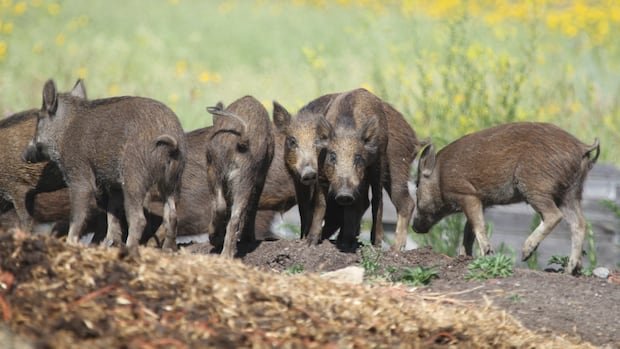

Wild boars have been designated as a nuisance by the Alberta government as of December 1, prompting the implementation of new restrictions on their captivity and hunting activities. Keeping, purchasing, selling, obtaining, or transporting wild boars in Alberta is now illegal without a permit, effectively prohibiting the establishment of new wild boar farms in the province.
The hunting and trapping of wild boars in Alberta are also prohibited, except for landowners or occupants who may kill the animals on their own property. Individuals who kill a wild boar are now mandated to report the date, location, and number of boars killed to the province promptly.
According to Hannah McKenzie, the province’s wild boar specialist, these changes were enforced due to the threats posed by existing wild boar populations and the potential risks associated with more animals escaping from captivity. She emphasized that wild boars not only cause harm to agriculture and the environment but also pose a significant danger in introducing and spreading foreign animal diseases such as African swine fever and foot-and-mouth disease, which could have severe financial implications for the pork and livestock industries and trade relationships.
The term “wild boar” refers to the Eurasian wild pig or hybrids resulting from the breeding of that animal with domestic swine. Initially brought to the Prairies in the late 20th century for livestock purposes, some of these animals managed to establish feral populations across Canada, predominantly in the Prairie provinces.
McKenzie noted that as wild boars continue to spread and become a greater threat, other provinces and jurisdictions have taken similar measures to manage wild boar populations in response to disease and trade risks. Currently, Alberta is collaborating with 12 wild boar farms in the province, offering them the choice to maintain their boars under stricter conditions or receive compensation from the government and exit the industry.
The exit program, estimated to cost around $2.6 million, provides $590 per boar along with compensation for fencing. The Ministry of Agriculture and Irrigation had allocated $3 million for wild boar management in the current provincial budget.
Charlotte Shipp, Alberta Pork industry programs manager, acknowledged that the regulations present a challenging situation for the organization, as wild boar producers also contribute to Alberta Pork. Shipp emphasized that tightening restrictions on wild boar farming, especially in preventing escapes and the potential spread of African swine fever, and offering an exit incentive to producers are positive steps.
African swine fever, which can devastate pig populations but is harmless to humans, recently caused an outbreak among wild boars in Spain, a leading pork producer in the European Union.
Tracking wild boar populations in Alberta is challenging, as they are difficult to survey, particularly due to their nocturnal activity and preference for densely forested habitats. Ryan Brook, a University of Saskatchewan professor specializing in invasive wild boars, highlighted the destructive nature of these animals, emphasizing their environmental impact through rooting activities and contamination of water sources in wetlands.
Brook advocated for stricter regulations on wild boar management, stating that sport hunting, which has been banned, has not proven effective in reducing wild boar populations due to their rapid reproduction rates and large litter sizes. He explained that hunting disperses groups of boars rather than eradicating entire populations, ultimately hindering control efforts.
In conclusion, despite the ban on sport hunting, the province continues its efforts to control the challenging wild boar population and mitigate the associated risks to agriculture and the environment.