

An Alberta-based company proposing silica sand mining in Manitoba has teamed up with the largest university in the province to develop an experimental groundwater monitoring network. This collaboration aims to create a cutting-edge system for tracking aquifer health in real time, utilizing technology that experts consider crucial for global groundwater research.
President of Sio Silica, Carla Devlin, expressed that the partnership with the University of Manitoba will focus on conducting a feasibility study and designing a scientifically robust, non-invasive monitoring system. The goal is not limited to the company’s project but extends to enhancing responsible resource management across the province.
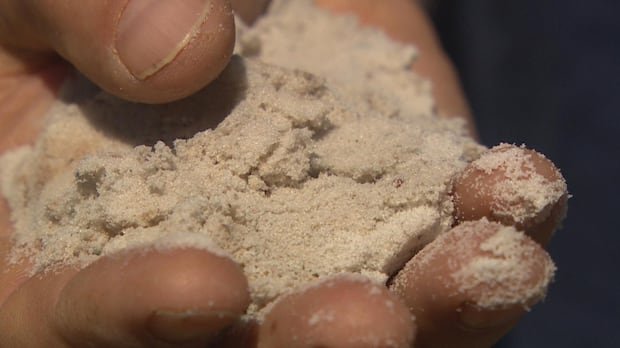
In a recent move, Sio Silica has reinitiated efforts to extract sand from the sandstone aquifer beneath the Rural Municipality of Springfield in southeastern Manitoba. The company faced a setback in 2024 when the NDP government denied their request for a sand extraction license due to concerns regarding potential impacts on water quality and risks of subsurface collapses.
Initially, Sio Silica had proposed a large-scale operation involving drilling thousands of wells over two and a half decades to extract silica sand for various industries. However, the plan encountered strong opposition from the community over environmental worries and the possibility of water contamination. In response, Sio Silica revised its proposal to drill fewer wells gradually and extract less sand in hopes of securing an environmental license.
The collaboration with the university is seen as a step towards transparency and a commitment to a deeper understanding of the aquifer system. Devlin emphasized that the research project aims to provide comprehensive data through advanced monitoring and open data practices, ensuring informed decision-making based on science and long-term stewardship principles.
The research project, hailed as a potential ‘game changer’ by Sio Silica’s technology team, will employ quantum gravimetry to monitor changes in the gravitational field caused by groundwater movements. This technology, capable of assessing groundwater quantities, will contribute not only to Sio Silica’s operations but also to the broader understanding of water circulation in Manitoba.
Experts like Ricardo Mantilla from the University of Manitoba underscore the significance of learning to interpret water dynamics, especially in regions where surface and groundwater interactions play a crucial role. Furthermore, the use of gravimetry for groundwater monitoring has gained traction globally, with applications such as NASA’s Grace Follow-On satellites demonstrating its utility for assessing water level changes on a larger scale.
Halloran, a hydrogeologist, highlighted the potential cost-saving benefits of gravimetry in groundwater monitoring, suggesting it could reduce the need for expensive well drilling. Groundwater, although unseen, is a vital resource that requires protection and monitoring, given its essential role in the water cycle and as a primary source of drinking water.
In conclusion, the partnership between Sio Silica and the University of Manitoba signifies a commitment to advancing groundwater research and fostering responsible resource management practices, with a focus on scientific integrity and environmental stewardship.