
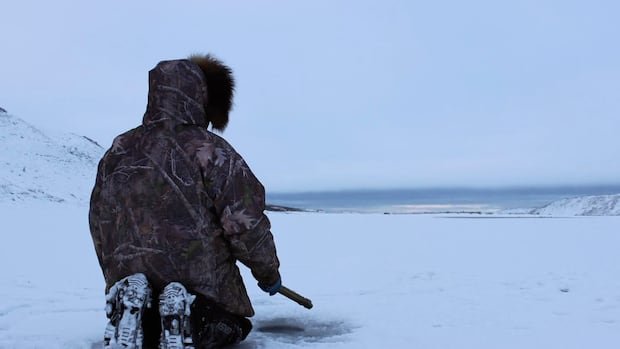

Lawrence Ruben utilizes an electric auger to drill through approximately six inches of ice on the Hornaday River located east of Paulatuk, N.W.T. The machine completes the task in just four seconds.
Upon pulling out the spiraled blade, water and crushed ice gush up to the surface. Ruben, turning to his daughter, humorously remarks, “the best contraption since sliced bread,” eliciting laughter from both before he proceeds to drill the next hole.
About an eight-kilometer distance from Paulatuk, reachable by a 25-minute ATV ride, lies the Hornaday River where Ruben and his wife, Dianne, have constructed a 16-by-16 foot cabin. This serene spot serves as their retreat for relaxation and Arctic char fishing.
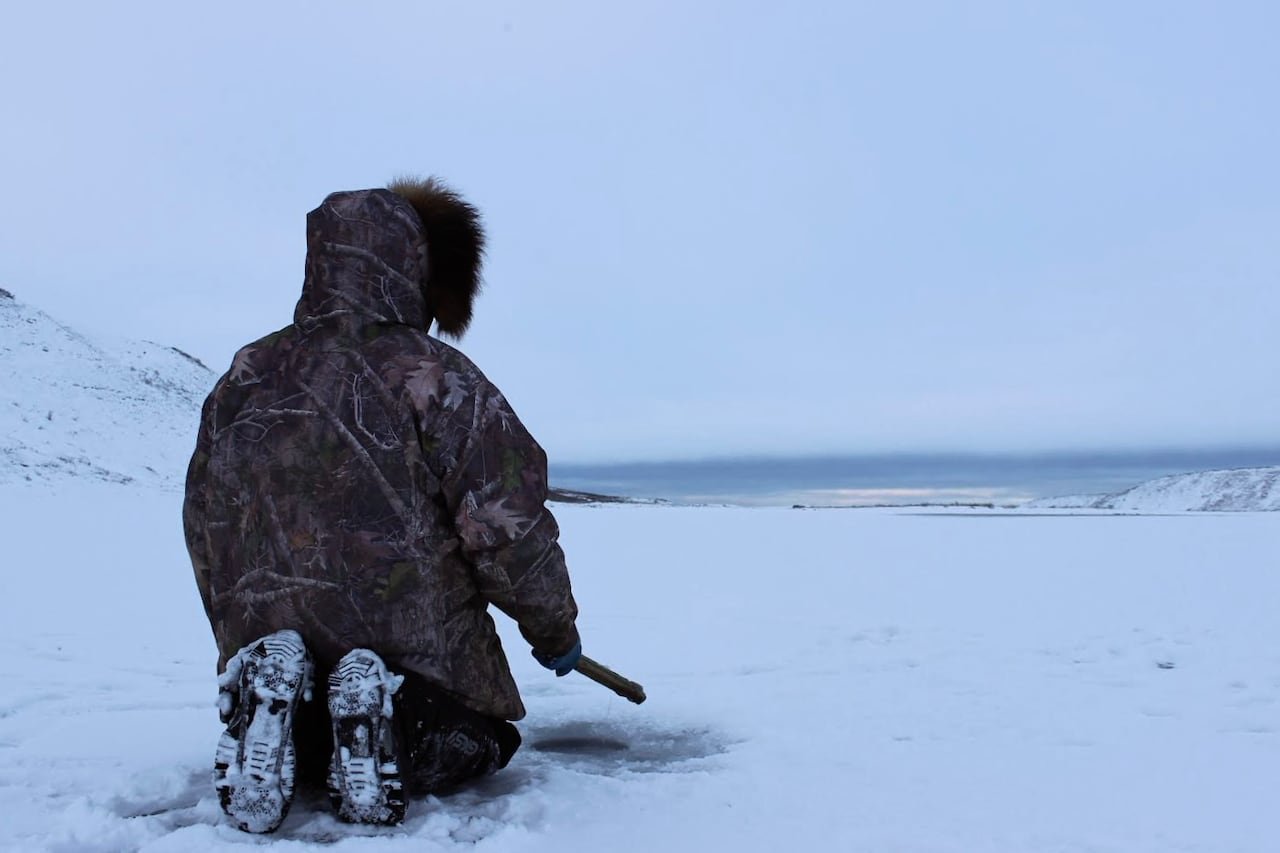
During a recent outing with their daughter and son-in-law, the fishing luck was not in their favor. The seasonal movements of Arctic char in the Paulatuk region, particularly their overwintering patterns in the Hornaday and Brock rivers before migrating back to Darnley Bay and the Arctic Ocean, have become less predictable.
Due to these changes, the community has joined forces with Fisheries and Oceans Canada for a collaborative research initiative. Last July, they caught and tagged 38 Arctic char with acoustic monitors to gain insights into the fishes’ whereabouts and behaviors.
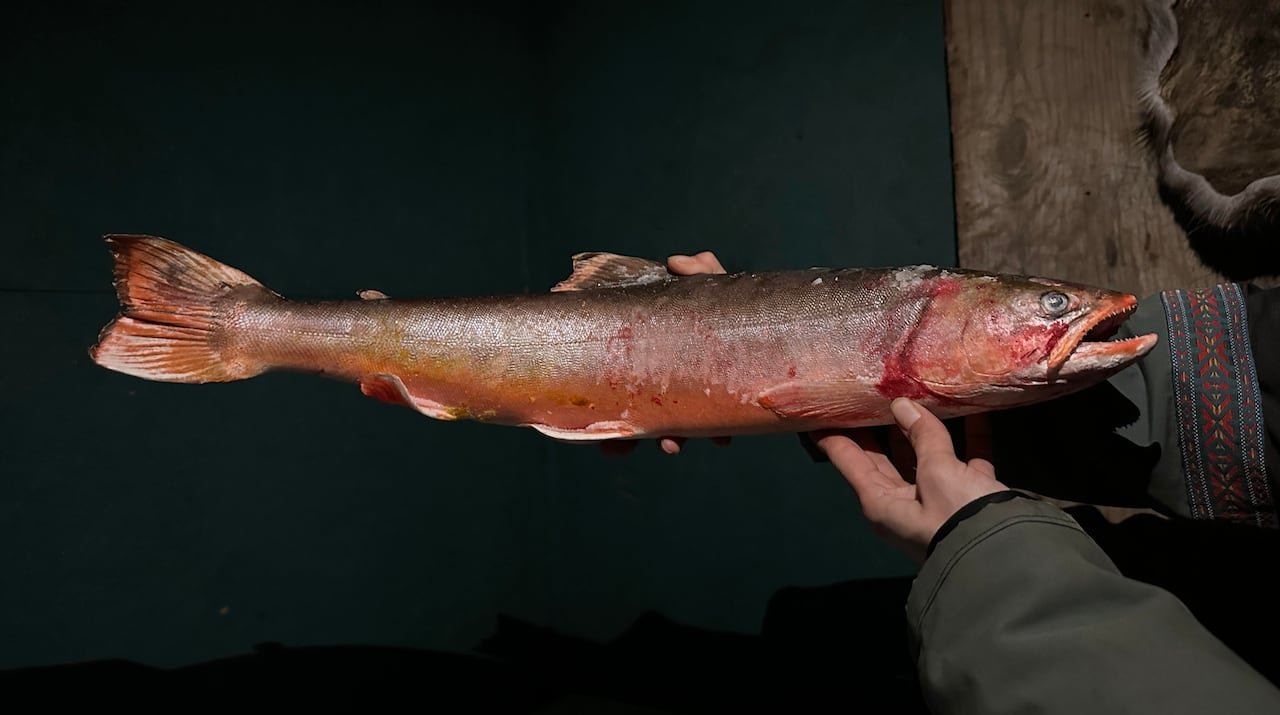
38 Arctic char tagged with acoustic monitors
Over a span of four weeks, federal scientists and Paulatuk harvesters captured and tagged 38 Arctic char from various locations around Darnley Bay with implanted acoustic transmitter tags. Additionally, they deployed 33 receivers in the Arctic Ocean to track the fish’s movements.
Explaining the process, Tazi Rodrigues, an aquatic science biologist with Fisheries and Oceans Canada, detailed how the acoustic tags, similar in size to a lip balm tube, were inserted into the fish. The tags emit high-frequency inaudible sounds that are captured by the receivers underwater, providing valuable data on the fish’s activities.
Next summer, the team plans to retrieve the receivers to extract the collected information, shedding light on the fish passing by and their timing.
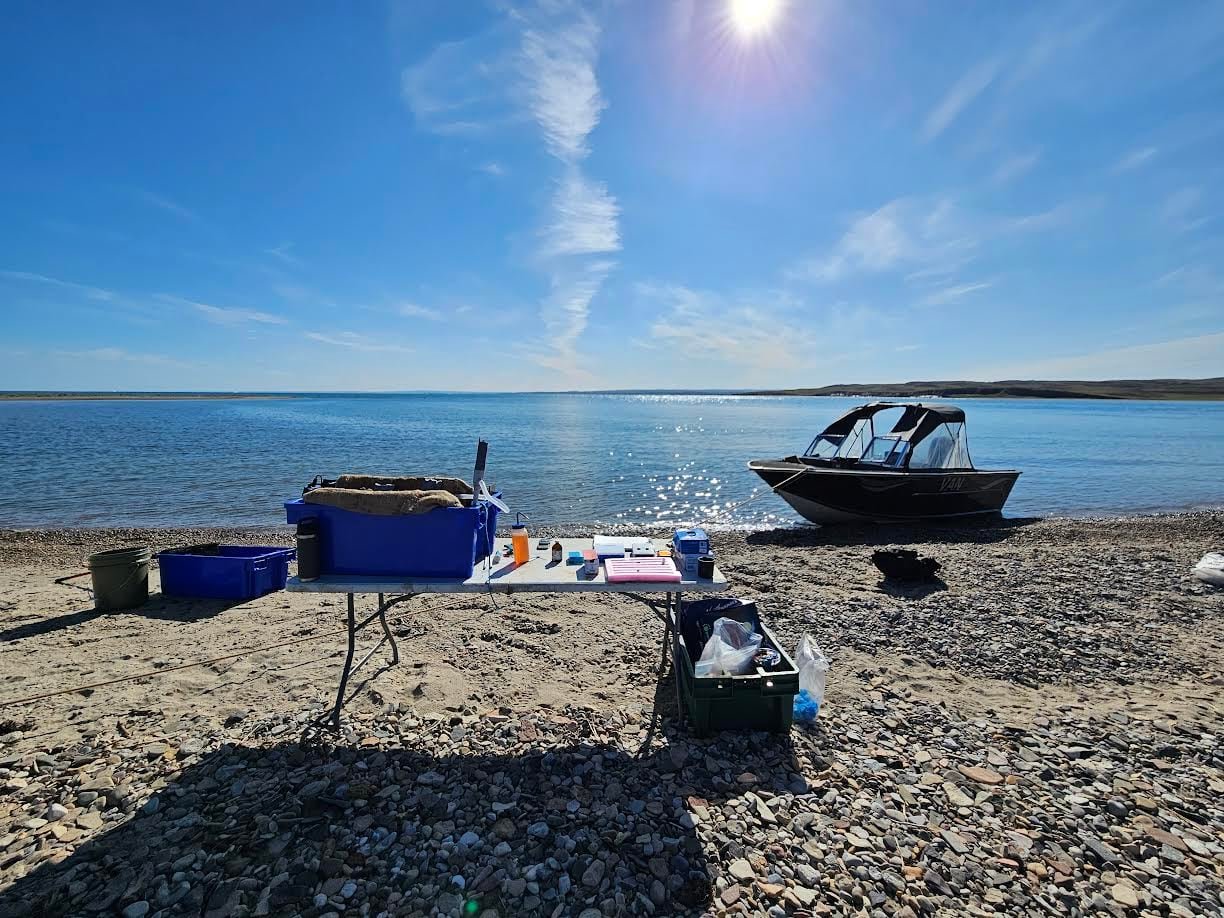
Paul Blanchfield, a federal research scientist based in Winnipeg, highlighted the long-term involvement of Fisheries and Oceans Canada in monitoring char in the region for over three decades. The current project aims to ascertain critical areas of Darnley Bay for the species and understand their migration patterns.
Given the rapidly changing Arctic conditions, including sea ice thickness reductions, Blanchfield emphasized the significance of studying how these alterations impact the fish’s marine environment residency and food resource dependence.
With the acoustic tags designed to last four years, there is a possibility of some fish being caught before the tags expire. Each fish has an external tag near its dorsal fin, enabling identification