
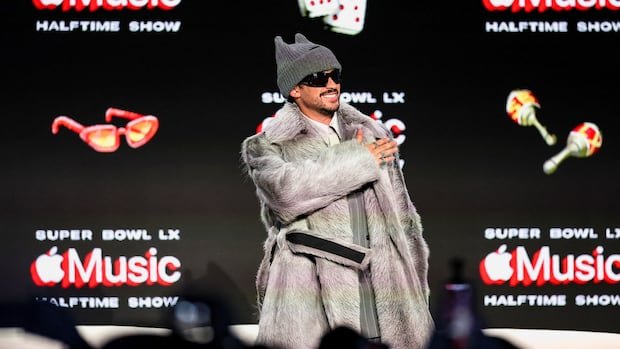

Puerto Rican sensation Bad Bunny is gearing up to grace the NFL Super Bowl halftime show in just four days. The renowned “King of Latin Trap” and global music icon remained mysterious during a recent press conference, declining to reveal any potential surprises for the highly anticipated performance. However, the 31-year-old artist, born Benito Antonio Martínez Ocasio, assured fans of a joyful and entertaining experience.
Emphasizing the upcoming event’s festive nature, Bad Bunny encouraged viewers to focus on perfecting their dance moves ahead of the big day, hinting at an enjoyable spectacle without divulging specific details. While music and dance form the core of the halftime show, discussions surrounding cultural commentary emerged following the decision to feature Bad Bunny, intensifying after his recent critiques of the Trump administration’s immigration policies at the Grammy Awards.
Accepting the Grammy for best música urbana album, Bad Bunny made a bold statement against ICE enforcement, sparking applause with his impassioned words emphasizing humanity and American identity. The artist’s outspoken stance resonated as one of the most direct expressions amidst a backdrop of political undertones surrounding his halftime performance.
NFL Commissioner Roger Goodell anticipates Bad Bunny leveraging the massive platform to foster unity, underscoring the artist’s global appeal and understanding of the show’s unifying potential. Acknowledging the controlled nature of Super Bowl performances, music expert Benjamin Tausig anticipates subtle yet impactful political undertones in Bad Bunny’s show, drawing parallels to past performances that deftly navigated sensitive themes.
Beyond the musical spectacle, Bad Bunny’s participation in the Super Bowl halftime show has stirred political debates, with critics on the right questioning his selection and highlighting his previous criticisms of the Trump administration. The artist’s decision to prioritize a residency in Puerto Rico over a U.S. tour due to concerns over ICE presence underscores the political dimensions surrounding his performance.
As anticipation builds for Bad Bunny’s historic Spanish-language performance, observers note the artist’s cultural significance within the Latino community and his unwavering commitment to his roots. Expected to deliver a set entirely in Spanish, Bad Bunny’s unique approach to staying true to his heritage while addressing social issues through his music adds a profound layer of political resonance to his Super Bowl appearance.