
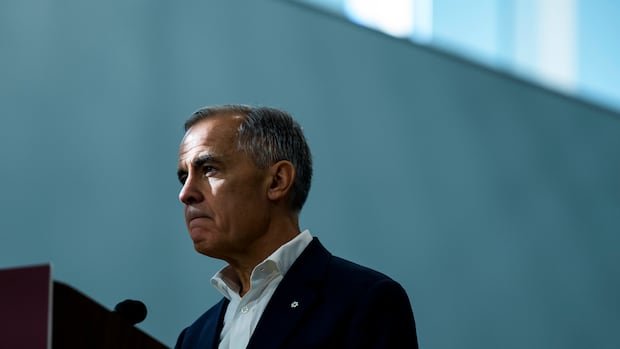

Prime Minister Mark Carney announced on Thursday that his administration is refraining from imposing additional retaliatory tariffs on American goods amidst ongoing trade tensions. Carney emphasized the positive momentum in bilateral discussions for potential relief. Pressure from some provincial leaders, like Ontario’s Doug Ford, and labor groups to challenge U.S. President Donald Trump’s tariff policies has been mounting due to job losses and investment shifts to the U.S.
Recently, Stellantis decided to move production of its Jeep Compass from Ontario to Illinois, which Carney attributed to U.S. trade actions. Despite calls for tougher measures against the U.S., Carney stressed the importance of ongoing negotiations between Canadian and U.S. officials. Trade Minister Dominic LeBlanc and Privy Council Clerk Michael Sabia are actively engaged in talks with their American counterparts, focusing on steel, aluminum, and energy sectors, including discussions on the revival of the Keystone XL pipeline.
Carney’s decision to lift most retaliatory tariffs imposed by the previous administration aimed to facilitate negotiations with Trump. While certain sectors like steel, aluminum, and autos remain under tariffs, most Canadian exports to the U.S. are tariff-free. Carney’s dialogue with Stellantis CEO Antonio Filosa regarding the Brampton plant closure highlighted the impact of trade dynamics on Canadian auto manufacturing.
Unifor, representing Stellantis autoworkers, expressed concerns over the Brampton plant closure and highlighted the need for fulfilling commitments made during bargaining in 2023. Opposition leader Pierre Poilievre criticized Carney for the job losses, calling for policy changes in the automotive sector. Poilievre proposed scrapping the upcoming electric vehicle mandate and removing the Goods and Services Tax (GST) on domestically manufactured vehicles to boost the industry.
In conclusion, the evolving trade scenario between Canada and the U.S. continues to impact key industries, prompting government officials and stakeholders to navigate challenges and seek equitable solutions for the economy.