

A Canadian company, South Bow, is leading a proposal to revive sections of the Keystone XL oil pipeline that could potentially boost Canada’s crude exports to the U.S. by over 12%. For this plan to proceed, it requires approval from U.S. President Donald Trump and the construction of additional links to U.S. refining centers.
Unlike the previous Keystone XL project, which was terminated by former President Joe Biden in 2021 due to prolonged opposition from Indigenous groups and environmentalists, the new proposal suggests a different route through the U.S. South Bow, a company established by TC Energy in 2024 to take over its oil pipeline business, is contemplating reviving parts of the pipeline that have already been constructed in Alberta and possess all necessary Canadian permits.
Canadian Prime Minister Mark Carney discussed the potential revival of the pipeline with Trump, hinting at leveraging it in future negotiations on the Canada-U.S.-Mexico trade agreement. Trump, known for his tariff disputes and annexation threats with Canada, has been advocating for lower oil prices, with many U.S. refiners heavily reliant on the approximately 4.4 million barrels per day of Canadian oil exports.
Bridger Pipeline, a possible U.S. partner for South Bow, has submitted a proposal to Montana regulators for a new 1,038-kilometer pipeline capable of transporting up to 550,000 barrels per day from the U.S.-Canada border in Montana to Guernsey, Wyoming. However, analysts suggest that additional links need to be established to connect the oil to key refining hubs such as Cushing, Oklahoma; Patoka, Illinois; and the U.S. Gulf Coast.
According to Matthew Lewis, founder of Plainview Energy Analytics, the most feasible configuration would involve a new pipeline stretching more than 680 kilometers from Guernsey to Steele City, Nebraska, connecting to the existing Keystone mainline system for further distribution. The project’s major challenge lies in obtaining permits, constructing new pipelines, and potentially facing environmental litigation.
Despite the potential benefits of the proposal, uncertainties remain regarding who would bear the risks associated with this project. South Bow has hinted at the possibility of linking with downstream pipelines in the U.S., while Bridger Pipeline and the White House declined to provide further comments on the matter.
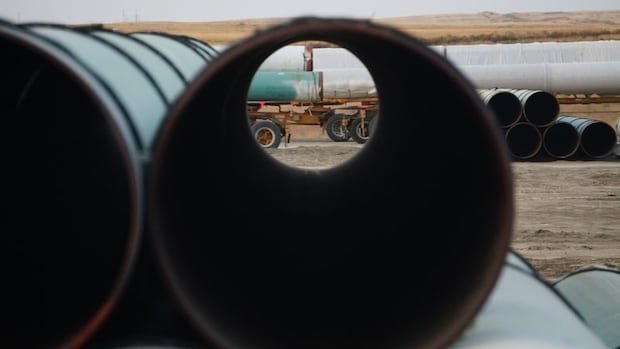
Bridger’s proposal aims to leverage existing infrastructure along the Montana-to-Guernsey route, making the permit acquisition process smoother. On the Canadian side, about 150 kilometers of the Keystone XL pipeline have already been built and left unused post-cancellation.
While the revival of the Keystone XL pipeline could offer economic advantages, it is expected to face opposition from environmentalists, landowners, and Indigenous communities, similar to previous pipeline projects in the U.S. that have encountered challenges. The proposal also comes amidst competing export pipeline expansions, with Enbridge and Trans Mountain undertaking capacity-enhancing projects for oil transportation to the U.S. markets.