
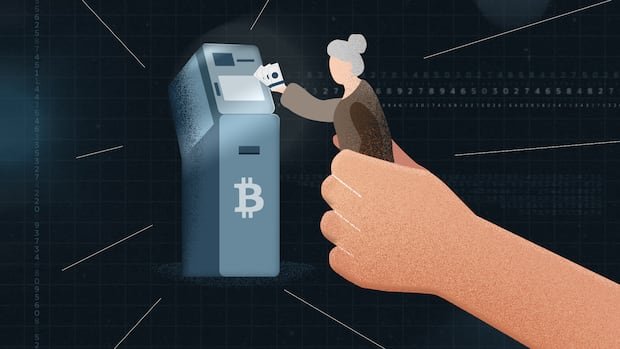

Brenda Smith, a 76-year-old retiree from Calgary, fell victim to a cyber scam last year when she unknowingly deposited over $12,000 into two cryptocurrency ATMs. Smith, who had recently suffered a stroke affecting her cognitive abilities, was manipulated into following the scammer’s instructions.
Crypto ATMs resemble traditional bank machines but operate differently by allowing customers to deposit cash and convert it into cryptocurrency, such as BitCoin, which can then be transferred to virtual wallets globally. Unfortunately, Smith remains clueless about the whereabouts of her lost money and expressed deep distress over the incident, emphasizing the significant impact of such a loss on a pensioner.
The first cryptocurrency ATM was introduced in a Vancouver coffee shop in 2013, marking a milestone in providing accessible crypto purchasing options. Over the years, the number of crypto ATMs has surged to approximately 3,600 in Canada and 39,000 worldwide, prompting concerns about their misuse and exploitation by various entities.
CBC News conducted an extensive investigation into the burgeoning crypto ATM industry, shedding light on how these machines have become a preferred tool for fraudsters across the country. Financial regulatory bodies, like FINTRAC, have noted the increasing exploitation of Bitcoin Automated Teller Machines (BATMs) for fraudulent activities, leading to concerns about potential rises in organized fraud targeting Canadian victims.
While crypto ATMs operate legally in Canada, regulatory oversight remains limited, with operators falling under the classification of “money services business.” Despite obligations to report large cash transactions and suspicious activities, gaps persist in regulating fees and transaction limits within the sector.
Law enforcement agencies, such as the RCMP and Toronto police, are grappling with the challenges posed by fraud incidents involving crypto ATMs, with losses reported to the Canadian Anti-Fraud Centre reaching millions of dollars annually. Detective David Coffey from the Toronto police highlighted the global reach of fraudulent activities facilitated by crypto ATMs and the difficulties in retrieving funds once they are transferred.
Canada boasts the highest number of crypto ATMs per capita globally, with TRM Labs estimating that these machines processed nearly $1.5 billion from the beginning of the year to mid-August. However, concerns persist about the underreporting of illicit activities linked to crypto ATMs, indicating a larger-scale problem than currently recognized.
Experts attribute the allure of crypto ATMs to their convenience and speed, making them attractive not only to legitimate users but also to scammers seeking to exploit vulnerable individuals. The lack of stringent authentication processes for small transactions and the ease of cross-border fund transfers have contributed to the rising trend of crypto ATM-related fraud schemes.
In Brenda Smith’s case, the realization of being defrauded dawned upon her when she shared her experience with her daughter, underscoring the devastating impact of falling victim to such scams. As authorities and stakeholders grapple with the challenges posed by crypto ATMs, efforts are underway to enhance regulatory frameworks and raise awareness to protect consumers from falling prey to fraudulent activities in the evolving cryptocurrency landscape.