
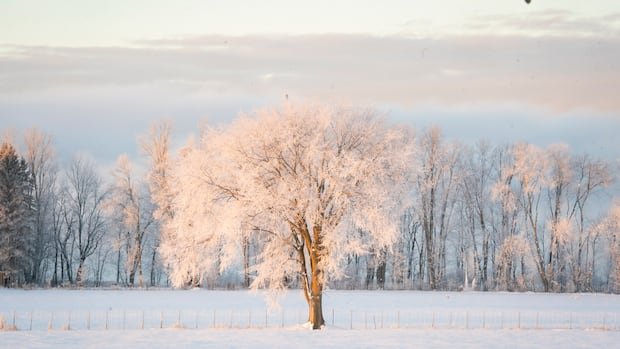

As we enter 2026, alongside the ongoing events, a new challenge emerges – the threat of exploding trees. However, this notion is not entirely accurate. Much of Canada and the northern United States are facing a severe cold snap, with temperatures dropping below –20 degrees Celsius, reaching as low as –40 degrees Celsius with wind chill in some regions.
This freezing weather is attributed to a disruption in the polar vortex, pushing frigid Arctic air deep into the U.S., including states like North and South Dakota, Michigan, and others. While a viral social media post suggested the extreme cold might lead to trees exploding in several states, this claim has been debunked by authorities.
The impending cold spell poses significant risks to the affected areas and is expected to contribute to a large and potentially hazardous winter storm spanning nearly 30 states from Friday to Monday. However, the risk of trees spontaneously exploding due to the cold is unfounded.
The phenomenon of “exploding trees” in such bitter weather is rooted in frost cracks that occur when temperatures drop suddenly and significantly. These vertical splits, more common in thin-barked trees, result from the rapid freezing of water and sap inside the tree, causing it to expand and potentially split. While the crack itself does not harm the tree and can heal with warmer temperatures, repeated cracking and healing may lead to lasting scars or frost ribs.
Hardwood trees, especially those that lose their leaves in winter or are overly pruned, are more susceptible to frost cracks. Species like elm, poplar, maple, oak, ash, aspen, and fruit-bearing trees are often affected by this phenomenon. Non-native tree species are particularly at risk during rapid temperature drops, while native trees have better adaptation to freezing conditions.
Apart from trees, other phenomena like frost quakes and thundersnow can also occur in extreme cold. Frost quakes, caused by rapid freezing of water in the ground, can create loud noises and even jolts akin to earthquakes. Thundersnow, a rare occurrence during winter storms, results from warm moist air meeting cooler air, creating thunder and lightning effects intensified by falling snow.
While the possibility of exploding trees in freezing temperatures is a captivating concept, the actual risks and phenomena at play are more grounded in natural processes like frost cracks and frost quakes, highlighting the unique challenges posed by severe winter weather conditions.