

Nuclear fusion advancements by General Fusion in Canada and China’s EAST reactor have sparked excitement about the potential of clean energy to meet the increasing power needs driven by AI and electrification. The emergence of new fusion startups globally has attracted significant private investments.
Nuclear fusion is a long-studied method of generating safe, clean, and virtually limitless energy from a readily available source. It occurs when the nuclei of two atoms merge to form a heavier element, releasing a substantial amount of energy. Unlike traditional nuclear reactors that produce radioactive waste by splitting atoms like uranium, fusion reactions do not generate such waste. However, commercial nuclear fusion reactors are not yet in operation.
China’s EAST fusion reactor achieved a significant milestone by stabilizing plasma at densities surpassing previous limits. This breakthrough could pave the way for the development of smaller and more affordable fusion reactors, as reported by Nature. General Fusion, based in Richmond, B.C., set a “world record” in neutron production, indicating the extent of fusion activity. While this accomplishment is specific to General Fusion’s technology, other government-funded fusion reactors have achieved higher fusion levels using different methods.
In Canada, the establishment of a new Centre for Fusion Energy in Ontario, funded by the federal government, Atomic Energy of Canada Ltd., Ontario government, Ontario Power Generation, and Stellarex Group Ltd., aims to advance fusion technology, including the construction and operation of a demonstration reactor.
The global interest in fusion stems from concerns about climate change, energy security, and the rising energy demands from data centers and AI applications. Fusion is seen as a viable solution to provide continuous, carbon-free energy. The Fusion Industry Association (FIA) reports a surge in private investments, with expectations that fusion could start contributing to the grid by the 2030s.
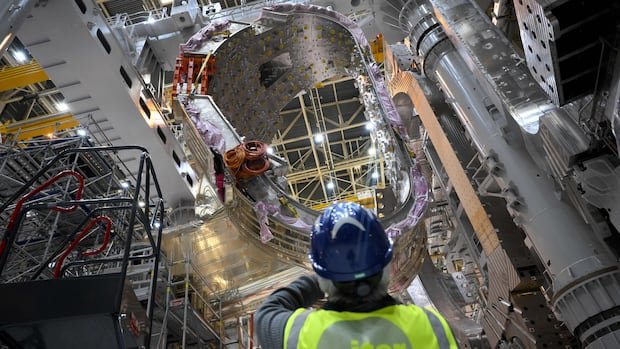
While progress in fusion research is promising, significant challenges remain, such as the high energy input required to initiate reactions and the need for sustainable fuel systems. ITER, a multinational fusion project in France, aims to achieve net energy gain and may offer insights into commercial fusion reactor viability. Canada plays a crucial role in supplying tritium, a key fusion fuel, to global fusion initiatives.
To make fusion economically competitive, efforts are underway to reduce costs and develop innovative technologies, such as high-temperature superconducting magnets. Private industry collaboration with governments is crucial to addressing the practical challenges in fusion technology and engineering.
The proximity to operational fusion reactors suggests the need for establishing supply chains, public policies, and regulations to support fusion energy development. It is essential to raise awareness and garner public support for the transition to fusion as a clean and sustainable energy source.