
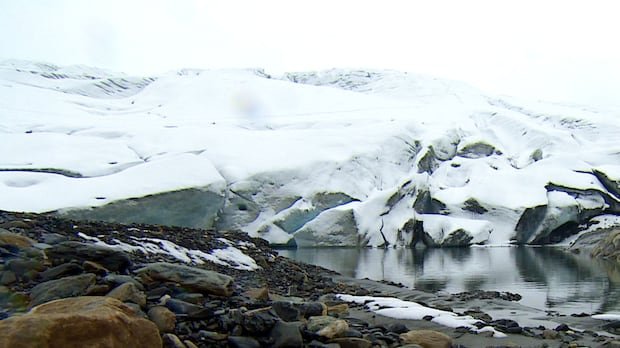

In 2025, the United Nations designated it as “The International Year of Glaciers’ Preservation,” but a climate researcher in northern British Columbia revealed that last year marked the second worst year for glacier loss in western Canada. Brian Menounos, an earth sciences professor at the University of Northern British Columbia, emphasized that the glaciers are rapidly disappearing, surpassing previous projections.
Menounos estimated that around 30 gigatonnes of glacial ice vanished in the region last year, equivalent to the entirety of B.C.’s Okanagan Lake. The primary driver of this phenomenon, according to Menounos, is the escalating greenhouse gas emissions from fossil fuel usage, leading to warmer temperatures.
Collaborating with an international team, Menounos has been monitoring global glacial health using various observation methods. Their recent peer-reviewed study reported unprecedented ice loss in Western Canada, the Conterminous U.S., and Switzerland between 2021-2024.
Another study published in the journal Nature last February warned of global glacier loss due to warmer conditions altering the reflective properties of glacier surfaces, intensifying the melting process. Mark Ednie, a glaciologist at the Geological Survey of Canada, emphasized the widespread scientific consensus on glacial decline and its adverse environmental and economic impacts.
In British Columbia, where approximately 17,000 glaciers exist, melting glaciers affect river levels crucial for fish habitats and hydroelectric power generation. Both federal and provincial governments have expressed commitments to combatting climate change, albeit facing challenges in balancing emission reduction goals with economic growth.
While government initiatives aim to address climate change, recent partnerships have led to the construction of new fossil fuel infrastructure, raising concerns among researchers like Menounos. He highlighted the dilemma between economic interests and environmental sustainability, stressing the high costs associated with fossil fuel reliance.
Overall, the accelerating loss of glaciers underscores the urgent need for comprehensive actions to mitigate climate change and preserve these vital natural resources.