
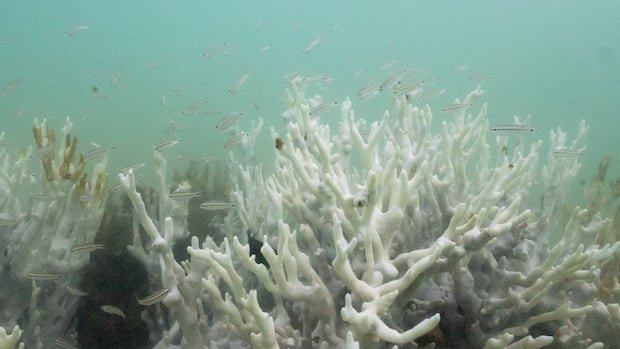

Global warming is accelerating towards critical thresholds earlier than anticipated, leading to the imminent collapse of the world’s coral reefs, a significant milestone termed as the first “tipping point” in the breakdown of climate-driven ecosystems, according to a report released by 160 researchers globally. The report, known as the Global Tipping Points report, compiles cutting-edge science to pinpoint irreversible points, coinciding with the upcoming COP30 climate summit in Brazil.
The report highlights the vulnerability of the Amazon rainforest, which faces the risk of collapse once the global average temperature exceeds 1.5°C due to deforestation rates. Moreover, there are concerns that continued temperature rise could disrupt the Atlantic Meridional Overturning Circulation (AMOC), a crucial ocean current that influences mild winters in northern Europe.
Lead author Tim Lenton from the University of Exeter emphasized the rapid changes occurring in various climate and biosphere sectors, urging for urgent action to mitigate the impacts. On a positive note, there has been progress in transitioning away from fossil fuels, with renewables surpassing coal in electricity generation for the first time this year, as reported by the think-tank Ember.
Despite the grim outlook, Lenton emphasized the importance of taking action to combat climate change and called upon nations participating in COP30 to reduce carbon emissions. Scientists have observed a swift escalation in environmental changes, with global temperatures already exceeding 1.3-1.4°C above pre-industrial levels, as reported by UN and EU agencies.
The past two years have recorded the highest global temperatures on record, leading to widespread marine heatwaves that severely impacted 84% of the world’s coral reefs, endangering marine life. To facilitate coral recovery, urgent and substantial climate action is required to lower temperatures to just 1°C above pre-industrial levels, according to experts.
Pep Canadell, a senior scientist at Australia’s CSIRO Climate Science Centre, emphasized the escalating negative impacts of climate change highlighted in the latest report. The findings underscore the pressing need for intensified global efforts to address climate change and preserve ecosystems.