

A team comprising numerous officials from various U.S. government agencies, including intelligence personnel, has been instrumental in guiding President Donald Trump’s efforts to seek retribution against individuals he perceives as adversaries. The group, known as the Interagency Weaponization Working Group, has been actively meeting since at least May and includes representatives from key entities such as the White House, the Office of the Director of National Intelligence, the CIA, as well as the Justice and Defense departments, the FBI, the Department of Homeland Security, the IRS, and the Federal Communications Commission, among others, based on government records and insider information.
President Trump’s executive order issued on his inauguration day in January directed the attorney general to collaborate with federal agencies to rectify past instances of government misconduct related to the weaponization of law enforcement and the intelligence community. Attorney General Pam Bondi and Director of National Intelligence Tulsi Gabbard have announced initiatives within their respective agencies to uncover and address alleged misuse of government authority against the President.
Confirming the existence of the Interagency Weaponization Working Group in response to inquiries, several U.S. officials highlighted that the group’s primary objective aligns with executing President Trump’s executive order. The administration’s emphasis on leveraging governmental power against perceived adversaries is more extensive and organized than previously disclosed, as indicated by the group’s formation. Typically, interagency working groups within the government are responsible for shaping administration policies, exchanging information, and coordinating joint efforts.
President Trump and his allies frequently use the term “weaponization” to describe their assertions that officials from prior administrations exploited federal authority to target him during impeachment proceedings, legal actions, and the investigation into Russian interference in the 2016 election. The Interagency Weaponization Working Group aims to address what its source described as going after ‘the Deep State,’ a term employed by the President and his supporters to refer to individuals they view as adversaries from past administrations and his own first term.
Discussions within the interagency group reportedly included individuals like former FBI director James Comey, Dr. Anthony Fauci, a key advisor on the COVID-19 pandemic, and former top U.S. military officials involved in mandating COVID-19 vaccinations for service members. The scope of potential targets has extended beyond current and former government personnel to encompass figures like Hunter Biden, the son of former President Joe Biden, as per the source.
While a senior ODNI official refuted claims of targeting individuals for retribution, emphasizing a focus on examining facts and evidence of alleged government weaponization for political purposes, the group’s actions and President Trump’s direct involvement remain unclear. The group’s activities, authority to take action, or advisory role also lack clarity.
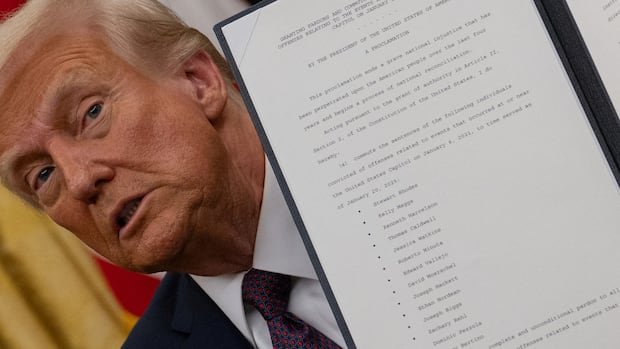
Additionally, the Interagency Weaponization Working Group has been linked to discussions surrounding the Jan. 6 Capitol riot prosecutions, Jeffrey Epstein files, legal cases involving Trump’s associates, and considerations regarding security clearances for transgender officials. Notably, the involvement of individuals with differing stances on COVID-19 vaccine mandates and election fraud allegations has been observed in the group, based on social media profiles and public statements.
Although specific details and actions of the interagency group remain elusive, the administration’s pursuit of alleged government weaponization signifies a persistent effort to address perceived abuses of power. The involvement of various officials from different agencies underscores the broad scope and implications of this undertaking.