
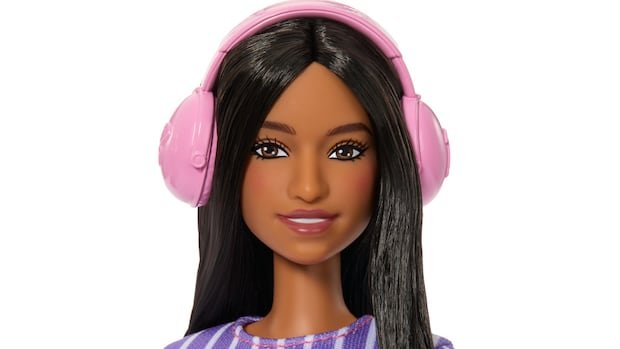

Barbie, an iconic doll and business empire, has undergone numerous transformations since its debut in 1959 to represent diverse women in terms of style, race, profession, and abilities. The latest release of an autistic Barbie by Mattel has sparked a significant conversation on representation in plastic form.
The new autistic Barbie, unveiled by Mattel on Monday, features visual characteristics and accessories reflecting traits associated with individuals on the autism spectrum. This design was developed in consultation with the Autism Self Advocacy Network. Only a small percentage of the population, around two per cent, are diagnosed with autism according to Statistics Canada.
The introduction of an autistic Barbie has been praised by many, including social media influencer Katherine L’Etang, a mother of two autistic children. However, some critics believe that the doll could reinforce stereotypes and misconceptions about autism. The doll’s release has been a significant moment for those who feel represented for the first time.
While some appreciate the effort by Mattel to be inclusive, others, like author Julie M. Green, express concerns about the doll’s portrayal of autism traits. Suggestions have been made to create a broader range of Barbie accessories for customization to better represent autistic individuals.
The autistic Barbie is part of Mattel’s Fashionista line, which aims to showcase diversity and inclusivity by featuring dolls representing various physical disabilities and characteristics. Despite differing opinions on the autistic Barbie, the online discourse surrounding its release has been deemed valuable for raising awareness about autism representation.
Overall, the release of the autistic Barbie has sparked important conversations about representation, inclusivity, and the portrayal of autism traits in toy form.