
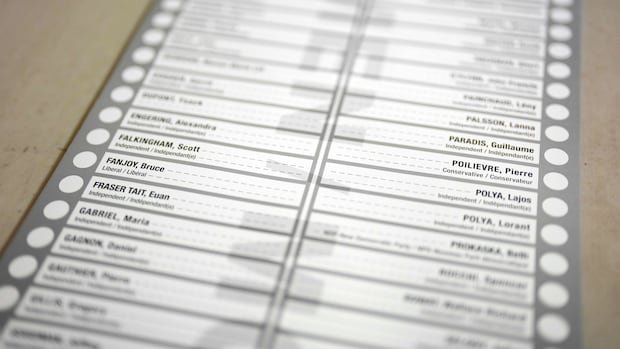

MPs grilled a member of a group of long ballot protesters for his involvement in flooding several federal ridings with numerous candidates in recent times. Tomas Szuchewycz, an organizer with the Longest Ballot Committee, defended the group’s activities during a tense meeting of the House procedures committee. Szuchewycz urged MPs to abstain from setting their own election regulations and proposed the establishment of an impartial body to oversee election rules.
The Longest Ballot Committee has orchestrated the candidacy of multiple Independent candidates across various ridings in elections since 2021. Notably, over 90 candidates ran in Conservative Leader Pierre Poilievre’s Ontario riding of Carleton in the recent spring election. Additionally, the group significantly increased the number of candidates in the August byelection in Alberta’s Battle River-Crowfoot, where Poilievre secured a seat after losing his Ottawa-area riding in April.
Currently, candidates must obtain 100 signatures from electors within a riding to register for candidacy. The Longest Ballot Committee has obtained signatures from multiple voters on various candidates’ nomination forms. Conservative MP Michael Cooper questioned the tactics of the protesters, alleging that they had electors sign nomination forms with blank candidate names, a claim Szuchewycz refuted.
During the committee session, Cooper cautioned Szuchewycz about his responses and hinted at potential contempt of Parliament. Szuchewycz denied accusations of submitting nomination forms with blank candidate names and clarified that any such forms were rejected by local election officials. Chief Electoral Officer Stéphane Perrault acknowledged the group’s attempts to submit forms without identified candidates in the past.
Elections Canada has had to adjust election rules to accommodate the influx of candidates spurred by the Longest Ballot Committee’s actions. In certain elections, ballots exceeding a meter in length were printed, causing confusion among voters and delays in vote counting. Bloc Québécois MP Christine Normandin questioned the effectiveness of the group’s tactics in advocating for electoral reform.
Various MPs raised concerns about the feasibility of having an independent body oversee election rules, citing accountability issues. Amid discussions about potential rule changes, Poilievre proposed legislation to counter what he termed the “longest ballot scam.” Perrault expressed openness to modifying electoral regulations to address long ballot protests, suggesting measures such as unique signature requirements per candidate and penalties for multiple signature endorsements.
Political science professor Lori Turnbull acknowledged the Longest Ballot Committee’s argument but highlighted practical challenges in implementation. She emphasized the need for a balanced approach that does not penalize genuine Independent candidates. Discussions also touched on the role of official agents for candidates and potential penalties for double endorsements by voters.
In summary, the ongoing debate surrounding the Longest Ballot Committee’s activities underscores the complexity of electoral reform efforts and the need to balance advocacy with practical considerations.