
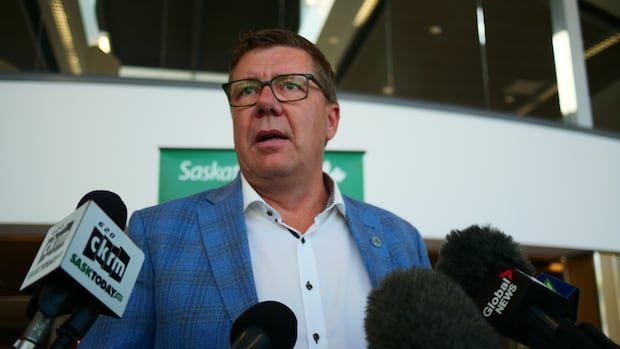

Premier Scott Moe’s recent endorsement of a proposed oil pipeline project has stirred reactions from experts and politicians nationwide. Alberta Premier Danielle Smith unveiled plans to seek approval for a new pipeline transporting bitumen from Alberta to the northwest coast of British Columbia, drawing concerns from British Columbia Premier David Eby and Indigenous groups. Moe emphasized that the decision on approving such crucial infrastructure rests solely with the federal government, asserting that the coast and ports belong to Canada, not just British Columbia.
This statement reflects the concept of federalism, which defines the power division between federal and provincial governments. Political science professor Peter Graefe noted that premiers’ positioning often stems from self-interest and can impact national unity as they cater to local voters. Notably, in Saskatchewan, Moe has advocated for increased provincial autonomy and opposed the federal carbon tax, leading to ongoing disputes in federal tax court.
The apparent contradiction between Moe’s historical stances and his current support for federal authority over the pipeline raises trust issues, according to Graefe. Saskatchewan NDP Leader Carla Beck criticized Moe’s approach, urging a focus on collaboration, Indigenous consultation, and finding practical solutions. Meanwhile, Eby labeled the pipeline project as “fictional” due to financial and consent concerns.
Moe’s unavailability for comment on Monday coincided with Alberta’s commitment of $14 million towards the pipeline proposal and the formation of a technical advisory group involving Enbridge, South Bow, and Trans Mountain. Alberta aims to secure private funding for pipeline construction, with a proposed submission of the application in spring 2026. Prime Minister Mark Carney’s recent “nation-building” project announcement did not include pipeline projects in the initial phase.