
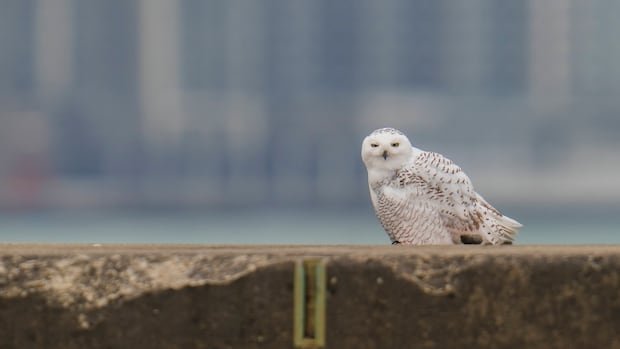

This year presents a unique opportunity to observe snowy owls in southern Canada as reported by The Owl Foundation, a rehabilitation center in Ontario’s Niagara region. The foundation has already taken in two juvenile snowy owls, hinting at a potential snowy owl irruption year. An irruption refers to a sudden increase in the local population of a species, such as an influx of snowy owls migrating south from the Arctic. The early appearance of young snowy owls in southern Canada and the northern U.S. indicates a rare chance to witness these visitors from the North, recently classified as threatened by the Committee on the Status of Endangered Wildlife in Canada.
Brian Hayhoe, a wildlife biologist at The Owl Foundation, highlighted that in previous winters, the center typically received zero to two snowy owls annually, often not until later in the season. Reports from other wildlife facilities in Ontario also suggest higher numbers of snowy owls appearing earlier than usual this year, indicating a notable trend observed by wildlife rehabilitators.
Additionally, snowy owls have been sighted near Chicago, further supporting the notion of a potential irruption year. Scott Weidensaul, a researcher involved in the snowy owl GPS tracking program Project SNOWstorm, noted that most sightings in the south have been concentrated in the central and western Great Lakes and the Prairies, with some even reaching as far west as British Columbia.
An irruption, a large-scale movement of birds occurring periodically, differs from regular migrations and typically happens every six years with snowy owls migrating in significant numbers. While past irruptions were noted in recent years, the most substantial occurred in 2013-2014 when thousands of snowy owls descended from the subarctic regions.
Experts like Guy Fitzgérald from the Université de Montréal suggest that irruptions may be linked to abundant lemming populations in the Arctic, leading to increased snowy owl reproduction. However, declining numbers in recent years raise concerns about potential breeding area issues in the owls’ northern habitat. As snowy owl sightings increase early in the season, researchers are monitoring their movements to determine if this year marks a true irruption.