
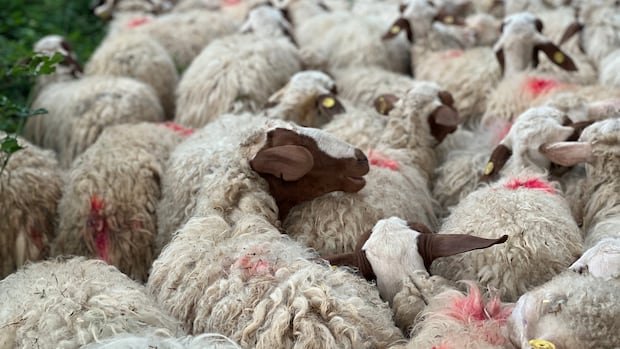

On a breezy autumn day, the gently undulating hills near Rome were the backdrop for an unexpected gathering. Wool producers, designers, activists, and even model, actress, and farmer Isabella Rossellini, along with her daughter, converged at Ilaria Venturini Fendi’s farm. The event aimed not to glorify high-end fashion but to completely reimagine it.
Fendi, who maintains 600 sheep at her working guest farm on the outskirts of Rome, highlighted the challenges of wool production in Italy. She emphasized that wool has become a byproduct with processing costs outweighing profits, leading to its wastage or incineration across Europe and North America.
The occasion marked the inaugural in-person World Hope Forum, a network dedicated to demonstrating that wool production can be sustainable, ethical, and localized. The forum united individuals committed to transforming the industry.
Fendi, renowned for her sustainable fashion label Carmina Campus, emphasized the importance of rethinking traditional economic models to drive positive change. The gathering preceded the upcoming UN International Year of Rangelands and Pastoralists in 2026, emphasizing the need to safeguard traditional herding practices and natural fibers.
Among the attendees was Blátnaid Gallagher, founder of Ireland’s Galway Wool Co-op, recognized for revitalizing native Irish wool and advocating for transparent fiber origin regulations in Europe. Gallagher’s efforts align with the push for greater consumer awareness and support for local farmers.
Netherlands-based designer Cynthia Hathaway echoed the sentiment, emphasizing the ecological and cultural significance of wool through her Wool March initiatives. She highlighted the value of transhumance, the seasonal migration of flocks, as a longstanding sustainable practice.
Despite the decline in wool production globally, there is a growing movement towards natural fibers. However, challenges persist, with European and North American mills struggling to compete against mass-produced wool from countries like China and Australia. This disparity has led to the closure of many local processing facilities.
In response to these challenges, innovative approaches like the farm-to-fashion program at Mama Farm in New York, run by Rossellini and her daughter, have emerged. The initiative promotes biodiversity and sustainability by connecting young designers with heritage wool to create unique garments.
While some producers are successfully scaling up sustainable practices, such as Manteco in Italy, which specializes in recycled wool, the industry still faces hurdles. Manteco’s recycled wool products have proven to be environmentally friendly, reducing CO2 emissions and water usage significantly.
In conclusion, the push for sustainable wool production is gaining momentum, with a growing emphasis on circularity and ethical practices. Education, advocacy, and collaboration are crucial in reshaping the fashion industry towards a more environmentally conscious and socially responsible future.