

Lab-grown diamonds are gaining popularity as an alternative to mined diamonds, particularly among engaged couples. This trend is partly driven by the significant price difference between lab-grown and natural diamonds. Toronto residents Daniel Ng and Olivia Chan opted for a lab-grown diamond when shopping for an engagement ring in 2024 due to the substantial cost savings associated with lab-grown stones.
Industry experts note that lab-grown diamonds can be up to 90 percent cheaper than natural diamonds. The increasing affordability and availability of lab-grown diamonds are attracting more young couples to choose this option over traditional mined diamonds.
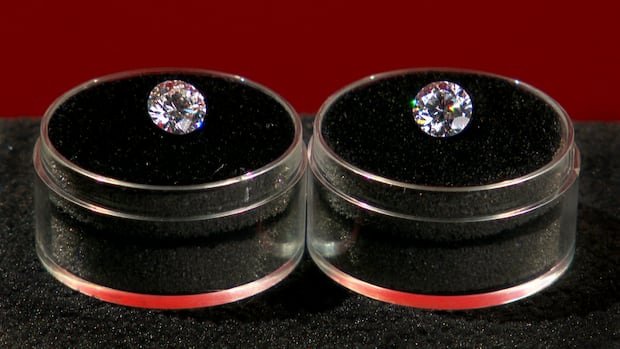
A recent investigation by Marketplace revealed that identical lab-grown diamonds are being sold at drastically different prices. To illustrate this point, CBC journalists purchased two lab-grown diamonds with identical specifications from Blue Nile and Alibaba. The Blue Nile diamond cost $1,639.23 Cdn, while the Alibaba diamond was priced at $228.86, highlighting the price disparity in the market.
Commenting on the price variation, industry analyst Paul Zimnisky emphasized that some retailers may be overpricing lab-grown diamonds to capitalize on higher profit margins. He highlighted the economies of scale in the manufacturing process, leading to lower production costs and subsequently lower prices for consumers.
Appraisers confirmed that both diamonds purchased by Marketplace were of equivalent quality, despite the significant price difference. They stressed that lab-grown diamonds can be produced more affordably in countries like China and India, leading to varying price points in the market.
Blue Nile, a prominent online jewelry retailer, defended its pricing by citing its brand reputation, quality assurance, and customer trust. The company emphasized its commitment to ethical sourcing and sustainable practices in diamond procurement.
The Canadian Jewellers Association acknowledged the pricing discrepancies in the industry but stated that setting uniform pricing guidelines is challenging due to the diverse nature of the market. The association encouraged members to provide transparent information to consumers for informed decision-making.
To shop smartly for lab-grown diamonds, consumers are advised to research, read reviews, use secure payment methods, and verify the authenticity of diamonds through professional appraisals. As lab-grown diamonds become more affordable, experts predict that prices will continue to decrease, making them a more accessible option for consumers.
Reflecting on their purchase experience, Chan and Ng expressed the importance of conducting thorough research and seeking competitive pricing in the diamond market. They emphasized the need for consistent pricing practices to ensure transparency and fairness for consumers.
Overall, the growing popularity of lab-grown diamonds signals a shift in consumer preferences towards more affordable and ethically sourced alternatives in the diamond industry.