
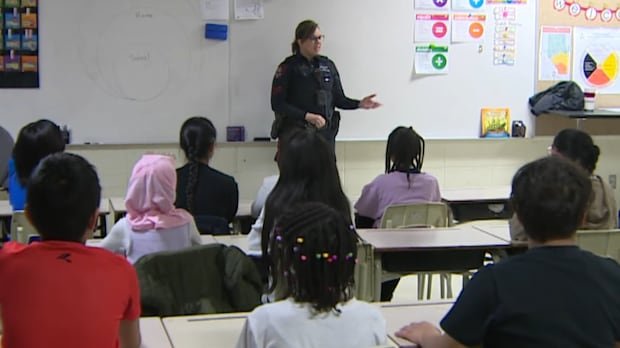

In the upcoming school year, Principal Heather Brown of a high school in Saanich, B.C., is pleased to see the return of police officers to Greater Victoria School District 61. Two years ago, the School Police Liaison Officer (SPLO) program was discontinued by the school board, leaving Brown without the valuable connection she previously had with the police. Brown had collaborated with SPLOs to support students involved in gang activities, which was a significant concern in her area. With the assistance of SPLOs, along with support from families and the community, they successfully helped several teenagers exit such situations. However, without SPLOs, Brown found it challenging to work with police officers who lacked a similar level of familiarity with the youth and herself.
Over the past few years, many Canadian schools phased out programs that stationed police officers on their premises due to reports of students feeling uncomfortable or intimidated. Now, in light of increasing violence in schools, there is a resurgence of these programs, eliciting mixed reactions. The aim is to build relationships between police officers and students through various interactions like sports events, safety presentations, and casual discussions, as highlighted by Chief Constable Dean Duthie of the Saanich Police Department.
Despite the push for police presence in schools, critics like Calgary parent Michelle Robinson express skepticism about the effectiveness of these programs. Robinson questions the depth of connections made by officers who are often shared among multiple schools, emphasizing the need for genuine relationship-building to ensure student safety and comfort. She also raises concerns about the historical context and impact of police presence on Indigenous students.
Advocates like Lisa Gunderson, a parent in Victoria, believe that police officers in schools can serve as a bridge between communities and law enforcement, fostering trust and understanding. Continuous collaboration and feedback are essential, along with revamped guidelines and ongoing training for officers on various societal issues, according to Gunderson.
While some students appreciate the presence of police officers for maintaining discipline and addressing incidents like vandalism, others, like Toronto middle school student Aaria Haji, advocate for a more inclusive approach that includes visits from a diverse range of community workers. Haji believes that such interactions can positively influence student behavior and attitudes.
In conclusion, the debate surrounding police presence in schools continues to spark conversations about safety, community relationships, and the role of law enforcement in education.