
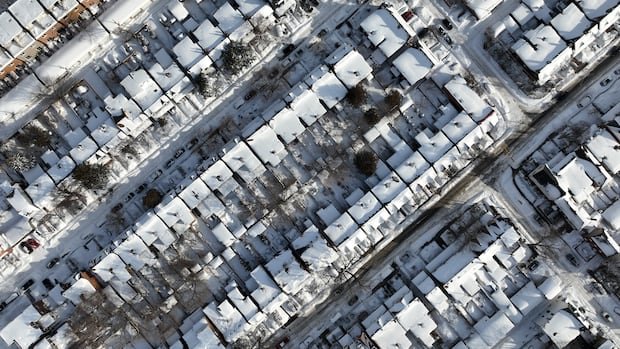

The Canadian Real Estate Association (CREA) attributes the decline in housing sales in January to adverse winter conditions. CREA’s latest data reveals a 5.8% decrease in national housing sales compared to the previous month.
Shaun Cathcart, CREA’s senior economist, explained that the sluggish January was most pronounced in parts of Ontario, where severe winter weather affected transactions. Cathcart noted that the storm in mid-January particularly impacted central and southwestern Ontario, hindering people from leaving their homes.
Real estate agent Joe Ferrante from the Hamilton area acknowledged that the cold and stormy weather likely deterred buyers from attending house showings last month. However, Ferrante attributed the reduced activity to a continuation of the slow market trend from late 2025.
Despite the January slowdown, Cathcart stated that CREA maintains its 2026 forecast, anticipating improvement unless faced with extreme weather conditions. At the end of January, Canada had approximately 4.9 months of housing inventory available for sale, aligning closely with the typical five-month average.
Cathcart mentioned that while some buyers may be waiting for lower interest rates, there are no imminent indications of rate adjustments. The Bank of Canada had lowered its key interest rate to 2.25% in late October but has not made any changes since then.
CREA highlighted the national average home price at $652,941 in January, a 2.6% decrease from the previous year. The association’s forecast for 2026 anticipates a modest 2.8% increase in this metric. Regionally, prices in British Columbia, Alberta, and Ontario declined year over year, offsetting gains in other provinces.